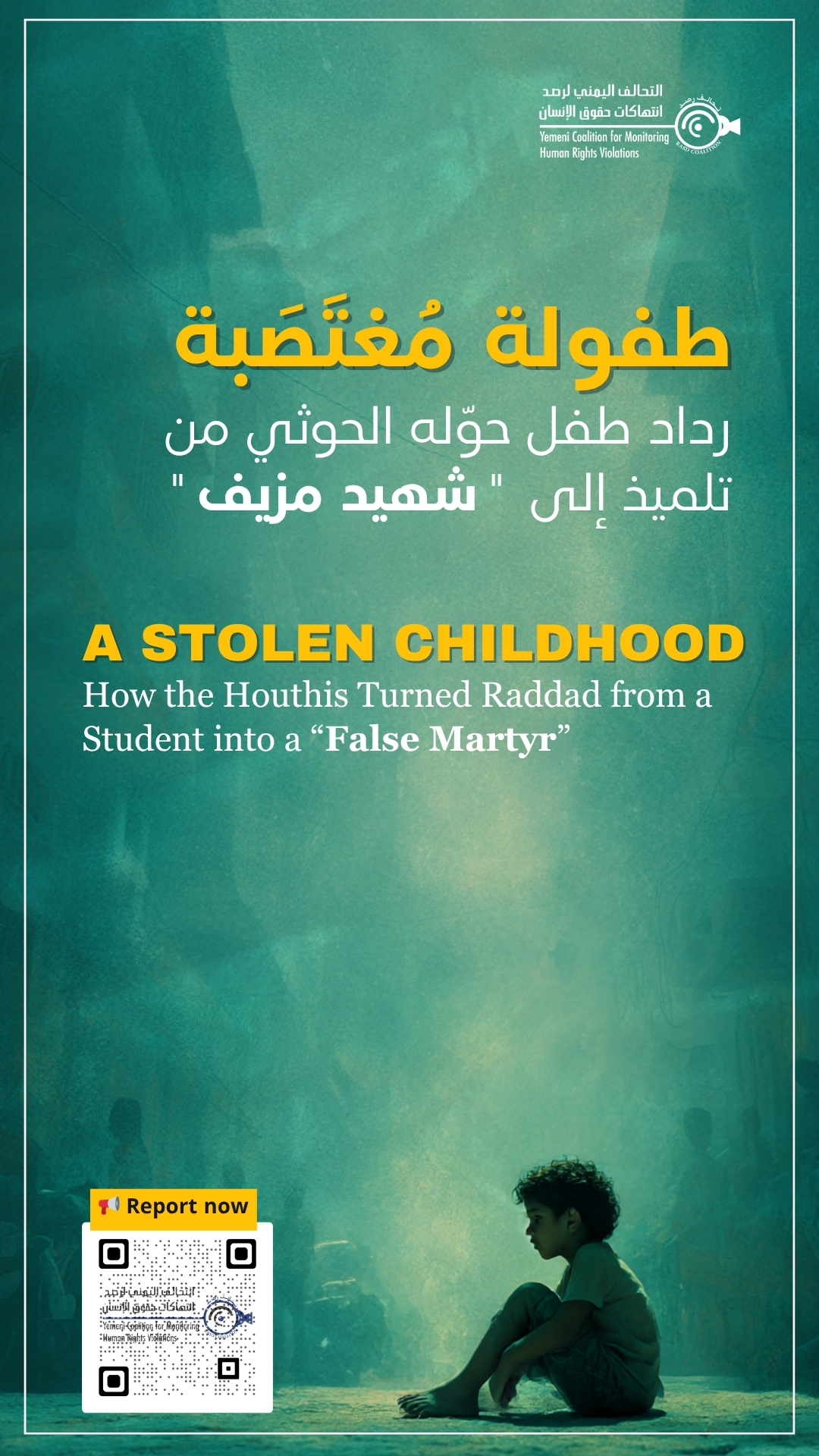
A Stolen Childhood: How the Houthis Turned Raddad from a Student into a “False Martyr”
|
Incident: |
Forced recruitment, torture, and killing of a child in a Houthi summer camp, followed by falsification of death and propaganda portrayal as a martyr. |
|
Date: |
February 2025 |
|
Location: |
‘Ayal Afir village, Nihm District, Sana’a Governorate |
|
Type of Violation: |
Forced recruitment, torture, and killing of a minor – posthumous manipulation |
Introduction:
In the remote village of ‘Ayal Afir in Nihm District, where poverty clings to the mountain soil and mingles with the scent of war, Raddad Saleh Ali no longer attending Al-Falah School—the place where his educational journey began and continued to the high school. Overnight, his dream of finishing school and going to university vanished. It was no longer a priority. His world, at just fourteen years old, was turned upside down—not by a stray shell, but by something more insidious: a systematic machine of recruitment and exploitation.
Raddad came from a poor family. His father, a construction worker, had lost his job like so many others in Yemen over the past decade of war. Like many families, Raddad’s viewed the Houthi group with a kind of sympathy—perhaps shaped by propaganda. But that sympathy came at a price far higher than they ever imagined. Poverty and misplaced trust became their currency in the war economy. And Raddad paid the ultimate price: forcibly recruited, tortured, and robbed of his right to live.
The Brother: The First Executioner
In early February 2025, Raddad was forced down a path he never wanted—recruitment and bearing arms. But this wasn’t the first time he was exposed to pressure to follow this path. What’s chilling is that the push didn’t come from a stranger—it came from within his own home. His older brother, Ahmed, had joined the Houthis years earlier as a fighter. He didn’t want his younger sibling to remain outside the group’s influence. He offered Raddad up as a sacrifice to the recruitment officers, hoping to elevate his own status. Thus, the brother became the first link in the chain that led Raddad to his death.
With the father’s silence and the brother’s encouragement, Raddad was handed over to Ahmed Al-Saqqaf, the recruitment officer in Nihm. Raddad’s opinion didn’t matter. No one cared that he refused. He was taken to a summer center in the village of Malerh—a place originally built as a Quran school by Sheikh Sinan Abu Luhum, now seized by the Houthis and turned into a camp for indoctrination and training children to kill.
Inside the walls of that closed center, Raddad discovered a different world. A world with no space for childhood, no room for dissent. He refused to become a cog in their machine. He refused to hold a weapon he didn’t understand. His rejection was innocent, honest, like any child’s.
But being innocent is a crime. And crimes have consequences. When all fake promises and persuasion failed, the “discipline” began. On Saturday, February 8, 2025, Raddad’s refusal turned into torment. Wooden sticks rained down on his head and face from the center’s supervisor. His scalp split open, blood poured from a deep wound and his nose, with no one to wipe it or offer a drop of water.
This wasn’t a momentary punishment, it was a calculated
submission. After the beating, the wounded child was locked in a dark room, left to bleed alone for two full days. Two days of pain, fear, and abandonment. That room became his prison, his hospital, and his first grave. There, his body began to change color, his face paled, and life slowly drained from him.
The Hospital: A Final Stop
When death became too obvious to hide, Raddad was rushed to 84th Hospital in Sana’a. Doctors immediately placed him in intensive care, but his soul was already slipping away. Three days later, on February 13, Raddad passed away. It wasn’t a natural death, it was a slow, brutal murder. The weapon: a wooden stick. The stage: a classroom meant for Quran memorization. The witness: the silent walls of a locked room.
The “Martyrdom” Farce: When Grief Is Bought
After the crime, the cover-up began. The perpetrators denied everything. They tried to deceive the father, claiming the death was due to a “nosebleed.” But the truth spread like wildfire—through Raddad’s peers and the few fighters whose conscience hadn’t yet died.
The father erupted in grief and rage. He refused to accept his son’s body. His refusal was the last echo of humanity within him.
But the exploitation machine didn’t stop. Senior Houthi leaders intervened. They applied pressure, mixing threats with promises. They used their strongest card: the brother, now complicit, to convince the father to accept a “settlement.” They offered a devil’s deal: they’d declare Raddad a “martyr,” grant him the rank of “captain,” and pay a monthly salary through the Martyrs’ Association.
In a moment of weakness—crushed by poverty, deception, and the loss of hope for justice—the father agreed. His son’s right to justice was traded for a forged file, a fake rank, and a monthly stipend. A formal funeral was held. Photos of Raddad in military uniform were distributed. He became a “martyr of the Quranic march” in Houthi propaganda, though in truth, he was a victim of their brutality.
The Witnesses: Voices from Within
the Yemeni Coalition for Monitoring Human Rights Violations researcher followed the case closely, gathering testimonies from villagers who knew the details. Their names were coded for protection.
Witness “J.R.” said: “Raddad died because of the beating… He refused recruitment and wanted to leave the center. They beat him until he bled and left him without help. When his condition worsened, they took him to the hospital, but he died. Then they appeased his family with promises of martyrdom and a salary.”
Witness “A.R.” added, revealing the depth of the terror: “He was forced into the center… and tortured for refusing recruitment. The torture wasn’t just to convince him, it was a message to the other children: this is the fate of those who say no.”
Conclusion: Not Just a Case, But a Pattern
Raddad’s story isn’t an isolated incident. It’s a microcosm of the machinery that grinds childhood in Yemen. It shows how poverty and faith are twisted into tools of exploitation, how family ties become channels of harm, and how victims’ rights are stolen under the guise of “settlement” and “martyrdom.”
The Yemeni Coalition for Monitoring Human Rights Violations issues an urgent plea: to the global conscience, to all who block accountability for criminals in Yemen—enough. It’s time to stop this machinery of crime. It’s time to look into the eyes of children like Raddad and not forget them in political equations.
Raddad wasn’t just a child who suffered and deserves justice. He’s part of a long memory of brutality endured by thousands of Yemeni children because of war, especially by the hands of the Houthis. This memory will not die. If it doesn’t remain alive in our awareness as a witness to the crime and a call for justice, it will retreat into the subconscious, becoming a deep wound that never heals, resurfacing conflict whenever the winds shift.fghgfh
طفولة مُغتَصَبة.. رداد طفل حوّله الحوثي من تلميذ إلى "شهيد مزيف"
|
الحادثة: |
تجنيد وتعذيب وقتل طفل في مركز صيفي تابع لجماعة الحوثي، ثم تزييف سبب وفاته وإعلانه "شهيدًا". |
|
التاريخ: |
فبراير 2025 |
|
مكان الواقعة: |
عزلة عيال عفير – مديرية نهم – محافظة صنعاء |
|
نوع الانتهاك: |
تجنيد قسري وتعذيب وقتل قاصر – استغلال ما بعد الوفاة |
المقدمة
في عزلة "عيال عفير" بمديرية نهم، حيث يذوب الفقر في تراب الجبال ويختلط برائحة الحرب، لم يعد "رداد صالح علي" يتردد على مدرسة الفلاح التي بدأ مسيرته التعليمية فيها وكان قد وصل إلى المرحلة الثانوية. بين عشية وضحاها تبخر حلمه بإنهاء الثانوية ودراسة الجامعة ولم يعد هذا الحلم ضمن أولوياته القصوى كما كان. انقلب عالم الطفل ذو الأربعة عشر ربيعاً رأساً على عقب، ليس بسبب قذيفة طائشة، بل بسبب آلة منهجية أقوى: آلة التجنيد والاستغلال.
كان رداد ابناً لعائلة فقيرة، يعيلها والد يعمل في البناء، وهو عمل توقف كما توقفت الكثير من اعمال وانشطة ومصادر رزق اليمنيين منذ عقد من الزمن هي عمر الحرب. كانت أسرة رداد ككثيرين غيرهم، ينظرون إلى جماعة الحوثي بنوع من التعاطف- بحكم البروبجندا ربما- لكن هذا التعاطف سيكون ثمنه أغلى مما توقعوا. لقد كان الفقر والتعاطف سلعتهم الرخيصة في سوق الحرب. إذ انتهى بهذا الطفل ضحية لانتهاك مركب (ثلاث انتهاكات جسيمة) بدء بتجنيده اجباريا، مرورا بتعذيبه، وانتهاء بسلبه حقه في الحياة.
الأخ.. الجلاد الأول
في مطلع فبراير ٢٠٢٥ عندما تم اجبار رداد على سلك طريق لم يكن يرغب بسلكها، وهي طريق التجنيد وحمل السلاح، ولكن لم تكن تلك أول محاولة وأول ضغط تعرض له من أجل قبول هذا المسلك، إلا أن الغريب أن حث هذا الطفل على التجنيد لم يأتِ من عدو غريب، بل نبت داخل جدران منزلهم. كان الأخ الأكبر، "أحمد"، قد انضم منذ سنوات إلى صفوف جماعة الحوثي كمقاتل. ولم يكن يريد لشقيقه الصغير أن يبقى خارج دائرة النفوذ. أراد أن يقدمه قرباناً لمسؤولي التعبئة، ليرتفع مقامه بينهم. وهكذا، كان الأخ هو أول حلقة في سلسلة اقتياد رداد إلى حتفه.
بسكوت الأب، وبتشجيع الأخ، سُلم رداد إلى "أحمد السقاف"، مسؤول التعبئة العامة في مديرية نهم. لم يكن رأي رداد ذا أهمية للجماعة ولم يكترث أحد لحقيقة أنه كان يرفض هذا المسلك. أُخذ الطفل إلى المركز الصيفي في قرية مليح، ذلك المركز الذي كان في الأصل وقفاً لتحفيظ القرآن وبناه لهذا الغرض الشيخ سنان ابو لحوم وسمي باسمه، قبل أن يستولي عليه الحوثيون ابان سيطرتهم على صنعاء وحولوه إلى معسكر لتلقين الكراهية وتدريب الأطفال على القتل.
الرفض.. والثمن
داخل جدران ذلك المركز المغلق، انكشف العالم الآخر لرداد. عالم لا مكان فيه للطفولة، ولا للرأي المخالف. رفض رداد أن يكون ترساً في آلتهم. رفض أن يمسك سلاحاً لم يفهم لماذا يجب أن يحمله. كان رفضه بريئاً، صريحاً، ككل الأطفال.
لكن البراءة هنا جريمة. وللجريمة ثمن. عندما فشلت كل وسائل "الترغيب" و"الإقناع" الزائفة، بدأت مرحلة "التأديب". في يوم السبت الثامن من فبراير ٢٠٢٥، تحول رفض رداد إلى جلدٍ وعذاب. انهالت عليه العصي الخشبية من قبل مشرف المركز. ضربات متكررة على رأسه ووجهه، حتى انشقت فروة رأسه وأخذ الدم ينزف من جرح غائر، ومن أنفه، دون أن يجد من يمسحه أو يناوله قطرة ماء.
لم يكن العقاب لحظة عابرة. لقد كان عملية إخضاع منهجية. بعد الاعتداء عليه وتعذيبه وجرحه، أُغلق على الطفل الجريح في غرفة مظلمة، وترك ينزف لوحده يومين كاملين. يومان من الألم، والرعب، والضياع. كانت تلك الغرفة سجنه ومستشفاه ومقبرته الأولى. هناك، بين جدرانها، بدأ لون جسده يتغير، وشحب وجهه الصغير، فيما كانت الحياة تتسرب منه قطرة قطرة.
المستشفى.. محطة أخيرة
عندما أصبحت علامات الموت ظاهرة للعيان، ولم يعد بالإمكان إخفاؤها، أُسعف رداد إلى مستشفى ٤٨ في صنعاء. على الفور ادخله الأطباء غرفة العناية المركزة، لكن الروح كانت قد أوشكت على المغادرة. بعد ثلاثة أيام، في الثالث عشر من فبراير، أسلم رداد روحه. لم تكن وفاة طبيعية، بل كانت جريمة قتل بطيئة ووحشية، اداتها عصا خشبية ومسرحها فصل يفترض أنه بني لتحفيظ القراءن، والشاهد على وحشيتها جدران غرفة مغلقة.
مسرحية "الشهادة".. عندما يُشترى الحزن بالمال
بعد الجريمة، بدأت مهمة "الطمس". لم يعترف الجلادون بجريمتهم. حاولوا في البداية خداع الأب، قائلين إن الوفاة كانت بسبب "نزيف أنفي". لكن الحقيقة كانت أكبر وانتشرت كالنار في الهشيم عبر زملاء رداد في المركز، وبعض من لم تُقتل ضمائرهم بعد من المسلحين.
هنا، هبت عاصفة الغضب في قلب الأب. رفض استلام جثة ابنه. كان رفضه هو صوت الإنسانية الأخير الذي تبقى فيه.
لكن آلة الاستغلال لم تتوقف. تدخلت قيادات حوثية كبرى. مارسوا الضغط. استخدموا اسلوب مزيج من الترغيب والترهيب، قدموا وعود للأب وهددوه بنفس الوقت. ثم استخدموا الورقة الأقوى: الأخ شريك الجلاد، ليقنع والده بـ"التسوية". عرضوا عليه صفقة شيطانية: سيعترفون بابنه "شهيداً"، وسيمنحونه رتبة "نقيب" وراتباً شهرياً من جمعية الشهداء.
في لحظة ضعف، تحت وطأة الفقر والخديعة وفقدان الأمل بالعدالة، قبل الأب. تم استبدال حق ابنه في العدالة، بملف مزور ورتبة وهمية ومبلغ نقدي شهرياً. أقيمت جنازة رسمية، ووُزعت صور لرداد بلباس عسكري، ليصبح "شهيد المسيرة القرآنية" في دعاية جماعة الحوثي، بينما كان في الحقيقة ضحية لوحشيتها.
الشهود.. أصوات من داخل الجدران
عمل راصد ميداني تابع للتحالف اليمني لرصد انتهاكات حقوق الإنسان (تحالف رصد) على متابعة هذه الواقعة لوقت طويل، وحصل على شهادات من أهالي قرية الضحية ممن هم مطلعين على تفاصيل القضية، تم ترميز أسمائهم هنا لحمايتهم.
قال الشاهد "ج.ر": "توفي رداد بسبب الضرب الذي تعرض له... لأنه رفض التجنيد وأراد الخروج من المركز. ضربوه حتى نزف وتركوه دون اسعاف. بعد أن تدهورت حالته أسعفوه لكنه مات. ثم تم مراضاة أسرته بوعد اعتماده شهيداً وبراتب."
وأضاف الشاهد "ع.ر"، مظهراً العمق الترهيبي للجريمة: "تم إدخاله إلى المركز بالقوة... وتعرض للتعذيب لأنه رفض. لم يكن التعذيب لإقناعه فقط، بل كانت رسالة لباقي الأطفال: هذا مصير من يرفض."
الخلاصة: ليست واقعة، بل نموذج
قصة رداد ليست حادثة أو واقعة منعزلة. إنها نموذج مصغر لآلة الدمار التي تطحن الطفولة في اليمن. إنها نموذج يكشف كيف يتم تحويل الفقر والإيمان إلى أدوات للاستغلال، وكيف تتحول الأواصر الأسرية إلى قنوات للإيذاء، وكيف تُسلب حقوق الضحايا تحت مسمى "التسوية" و"الشهادة".
التحالف اليمني لرصد انتهاكات حقوق الإنسان (تحالف رصد) يوجه نداءً عاجلاً: إلى الضمير العالمي، وإلى كل من يقف حجر عثرة أمام مسائلة المجرمين في اليمن: كفى. لقد آن الأوان لوقف آلة الإجرام هذه. آن الأوان لأن ننظر إلى عيون أطفال مثل رداد، ولا ننساهم في معادلات السياسة.
رداد ليس فقط طفل تعرض لما تعرض له ويستحق الإنصاف، بل أنه جزء من ذاكرة طويلة للوحشية التي تعرض لها آلاف الأطفال في اليمن بسبب الحرب وعلى يد اطرافها وخاصة جماعة الحوثي، وهذه الذاكرة لن تموت، لأنها ان لم تبقى حاضرة في الوعي والوجدان كشاهدة على الجريمة وتذكير بضرورة تحقيق العدالة، فإنها سوف تنسحب إلى اللاوعي وستبقى جرحا غائرا يسبب الألم دوما، ويعيد الصراعات إلى السطح كلما تغير الجو.
fghgfh