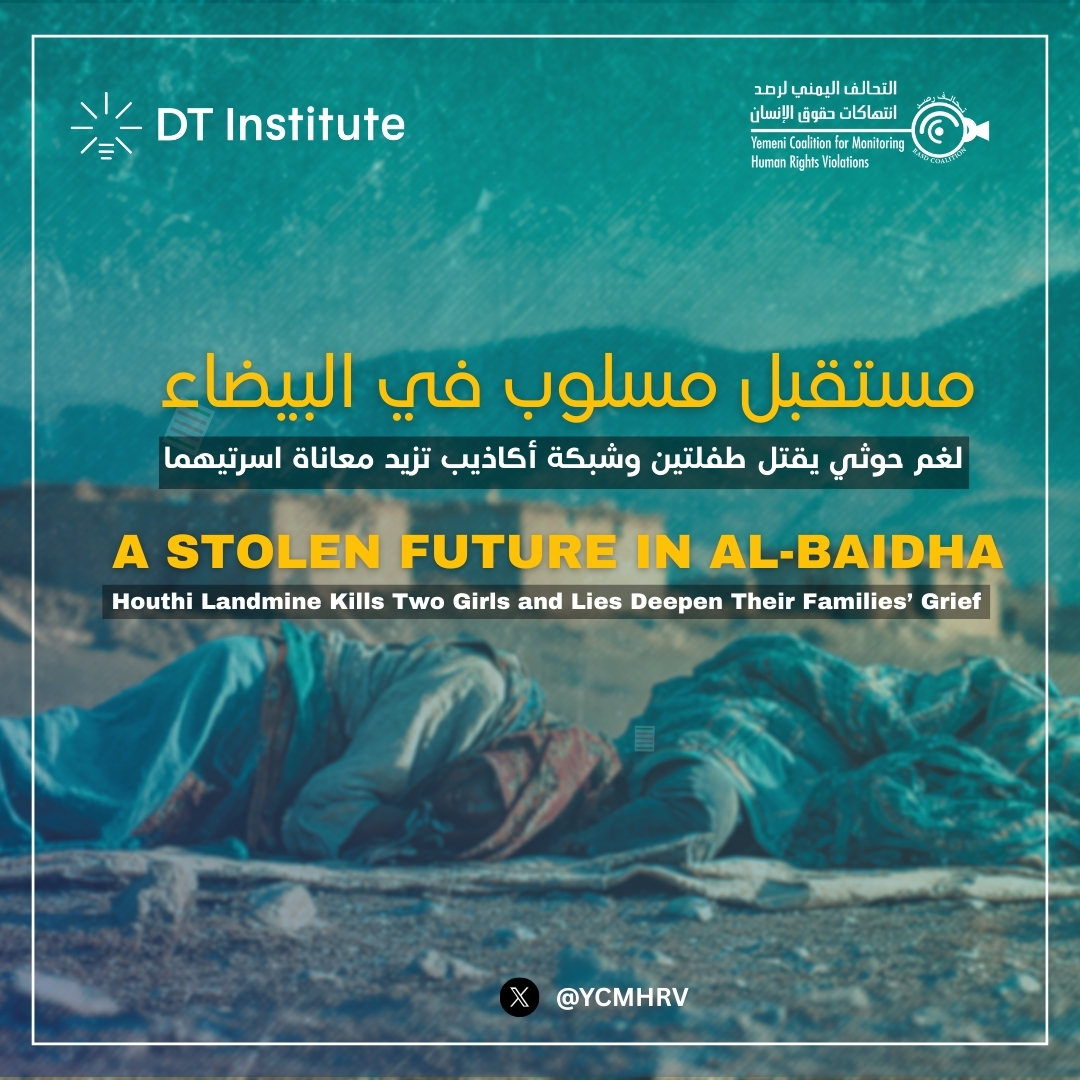
Incident: |
Killing of Two Girls by a Houthi Landmine in Al-Baidha |
Date: |
August 16, 2025 |
Location: |
Al-Ghul Al-A’la area, Na’man District, Al-Baidha Governorate |
Type of Violation: |
Killing by Explosion |
Introduction:
The lives of Intisar Abdulrab Saleh Al-Salhi (17) and Aisha Hussein Abdulrab Al-Salhi (14) were tragically cut short in a horrific act of violence on August 16, 2025. The two girls were killed by a landmine explosion in Al-Ghul Al-A’la area of Na’man District, Al-Baidha Governorate.
According to documentation by “Rasd Coalition,” based on reports from independent media outlets such as Al-Masdar Online and statements by judge Ishraq Al-Maqtari, a member of the National Commission to Investigate Alleged Human Rights Violations in Yemen, the explosion was caused by a landmine previously planted by Houthi forces. Yet the girls’ story did not end with their deaths—it became the center of a brutal battle over truth and accountability, where the memory of victims is often the first casualty.
Disinformation and Manipulation
The girls were killed in the afternoon of August 16. Almost immediately, the Houthis group began deploying a familiar pattern of disinformation. At 11 p.m. that same day, the official spokesperson for the Houthi-controlled Ministry of Health, Dr. Anis Al-Asbahi, posted a statement on X (formerly Twitter) claiming the children’s deaths were caused by remnants of what he called “the aggression.”
This phrase, routinely used by Houthi authorities, is a deliberate attempt to deflect blame from Houthis who widely use landmines and redirect it toward the Saudi-led Coalition. Further confusion was sown by the independent outlet “Yemen Daily,” which published the news alongside an unrelated, outdated image without clarification, an irresponsible act that risks misleading the public and distorting the specific facts of this tragedy.
The Houthi strategy is clear: generate enough noise and contradictory claims to foster doubt and evade accountability. By blaming “war remnants” and promoting a misleading narrative, they seek to absolve themselves of legal and moral responsibility for planting explosives that continue to claim innocent lives long after frontlines have shifted.
The internationally recognized government also bears partial responsibility for insufficient demining efforts. However, the primary responsibility for deploying the landmines lies with the Houthis group.
A Widespread Plague
This incident is not isolated. It is a few heartbreaking data points in a much larger epidemic. Saleh Al-Humaikani, Director of the Human Rights Office in Al-Baidha (under the internationally recognized government), provided staggering context: from 2015 to August 2025, landmines in Al-Baidha alone have killed 151 people—62 of them children—and injured 200 others, including 89 children.
The deaths of Intisar and Aisha represent a double violation. The first was the physical explosion that stole their lives. The second is the ongoing assault on the truth surrounding their deaths—an assault carried out through official statements and media manipulation. This weaponization of narrative is a core element of violence in Yemen, meaning victims are not only killed by conflict but also erased from memory by it, their stories twisted for political gain.
Conclusion
What happened to Intisar and Aisha Al-Salhi transcends personal tragedy. They have become stark symbols of the systematic use of landmines by the Houthis group and the denial of responsibility. The calculated response—blaming “remnants of aggression” and obscuring facts with unrelated images—is not a simple lie but a core component of a military strategy designed to terrorize civilians and evade accountability.
This weaponization of narrative inflicts a second, deeper wound on the victims’ families. It forces them to grieve not only the loss of their children but also the theft of the truth surrounding their deaths. They are left to confront not just their pain, but an organized campaign beyond their capacity to resist—one that aims to erase the context of the crime and deny them any hope of justice or official recognition. This deliberate distortion of truth is an attack on memory itself, ensuring that the historical record of the conflict remains fragmented and contested, much like Yemen’s own landscape.
Breaking this vicious cycle requires the international community to move beyond condemnation of landmine use—a violation of international humanitarian law—and confront the machinery of disinformation that enables it. Human rights reports, UN expert investigations, and diplomatic channels must begin explicitly naming and analyzing these distortion tactics as integral to the violations themselves.
Donor states must prioritize funding for specialized mine clearance teams—and, crucially, for independent Yemeni media and human rights monitors who stand on the front lines documenting this dual tragedy: the explosions and the lies that follow.
The world must see the true story of Intisar and Aisha: a life stolen by explosives, and a memory assaulted by words and deception.
الحادثة: |
مقتل طفلتين بلغم حوثي في البيضاء |
التاريخ: |
16 أغسطس 2025 |
مكان الواقعة: |
منطقة الغول الأعلى بمديرية نعمان بمحافظة البيضاء |
نوع الانتهاك: |
قتل بانفجار |
المقدمة
انقطعت حياة انتصار عبدالرب صالح الصالحي (17 عاماً) وعائشة حسين عبدالرب الصالحي (14 عاماً) في لحظة عنف مروعة يوم 16 أغسطس 2025. قُتلت الفتاتان بانفجار لغم أرضي في منطقة الغول الأعلى بمديرية نعمان بمحافظة البيضاء.
وفقاً لتوثيق "تحالف رصد"، استناداً إلى تقارير من وسائل إعلام مستقلة مثل "المصدر أونلاين" وتصريحات من المحققة الحقوقية اليمنية إشراق المقطري عضوة اللجنة الوطنية للتحقيق في ادعاءات انتهاكات حقوق الانسان في اليمن، فإن الانفجار الذي قتل انتصار وعائشة نجم عن لغم أرضي زرعته قوات جماعة الحوثي في فترات سابقة. لكن قصة الفتاتين لم تنته بوفاتهما، بل أصبحت موضوعاً لمعركة قاسية حول الحقيقة والمسؤولية، معركة غالباً ما يكون فيها ذكرى الضحايا أول الضحايا.
تضليل وتلاعب
قتلت الطفلتين عصر يوم 16 أغسطس وعلى الفور، تقريباً، بدأت جماعة الحوثي بممارسة نمطا مألوفا من التضليل. عند الساعة 11 مساء من نفس اليوم نشر الناطق الرسمي لوزارة الصحة التابعة للحوثيين، الدكتور أنيس الاصبحي، تغريدة على موقع التواصل الاجتماعي X (تويتر سابقا) ادعى فيها علناً أن وفاة الأطفال سببه انفجار جسم من مخلفات ما يسميه بـ"العدوان". هذه العبارة، التي تستخدمها السلطات الحوثية بشكل روتيني متكرر، هي محاولة متعمدة لتحويل اللوم بعيداً عن استخدامها الواسع للألغام الأرضية وإلقائه على التحالف الذي تقوده السعودية. علاوة على ذلك، فإن المنفذ الإعلامي المستقل "يمن ديلي" زاد من التشويش بنشر الخبر مرفقا بصورة قديمة غير مرتبطة بالضحايا دون توضيح، وهو فعل غير مسؤول يخاطر بتحويل الجمهور عن الحقائق وتشويه الحقائق المحددة لهذه المأساة.
إستراتيجية جماعة الحوثي واضحة: خلق ما يكفي من الضجيج والادعاءات المتناقضة لتعزيز الشك والتهرب من المساءلة. من خلال إلقاء اللوم على "مخلفات الحرب" واستخدام تصور مضلل، تسعى إلى تبرئة نفسها من المسؤولية القانونية والأخلاقية عن زرع المتفجرات التي لا تزال تزهق أرواح الأبرياء حتى بعد فترة طويلة من تغرت خطوط الجبهة. الحكومة المعترف بها دولياً تتحمل أيضاً قدراً من المسؤولية لفشلها في تنظيف المناطق الملوثة بشكل مناسب، وتثقيف المدنيين بشأن المخاطر، على أن المسؤولية الأساسية عن نشر الأسلحة تقع على عاتق جماعة الحوثي.
وباء كبير
هذه الحادثة ليست معزولة. إنها نقطة بيانات واحدة مفجعة في وباء أكبر بكثير. مدير عام مكتب حقوق الإنسان في محافظة البيضاء (التابع للحكومة المعترف بها دولياً)، صالح الحميقاني، قدم سياقاً مذهلاً: منذ بداية عام 2015 حتى أغسطس 2025، قتلت الألغام الأرضية في البيضاء وحدها 151 شخصاً، 62 منهم أطفال، وأصابت 200 آخرين، بينهم 89 طفلاً.
قتل انتصار وعائشة هو انتهاك مزدوج. الأول كان الانفجار المادي الذي سرق حياتهما. الثاني هو الاستمرار في الاعتداء على الحقيقة التي تحيط وفاتهما - اعتداء يتم تنفيذه من خلال البيانات الرسمية والتلاعب الإعلامي. هذا التسليح للسرد هو عنصر أساسي في العنف في اليمن، مما يعني أن الضحايا لا يُقتلون فقط بسبب الصراع ولكن يتم محوهم ذكراهم أيضا بواسطته، حيث يتم التلاعب بقصصهم من أجل مكاسب سياسية. يدين "تحالف رصد" حملات التضليل التي تزيد من معاناة أسر الضحايا وتعيق طريق العدالة.
الخلاصة
إن ما حصل للطفلتين انتصار وعائشة الصالحي يتجاوز المأساة الفردية؛ لقد أصبحتا رمزاً صارخاً للاستخدام المنهجي للألغام الأرضية من قبل الجماعة الحوثية وإنكارها المتكافئ للمسؤولية. الرد المباشر والمحسوب – بإلقاء اللوم على "مخلفات العدوان" وتعتيم الحقائق بصور غير ذات صلة – ليس مجرد كذبة بسيطة، بل هو مكون أساسي لإستراتيجية عسكرية تعتمد على بث الرعب في اوساط المدنيين ثم التهرب من أي مساءلة. وهذا يخلق دورة دائمة من العنف والإفلات من العقاب، حيث يكون الضحايا هم أول من يُنسى والجناة هم أول من يبرئ أنفسهم.
هذا التسليح للسرد يُلحق إصابة ثانية وعميقة بأسر الضحايا. فهو يرغمهم على الحزن ليس فقط على فقدان أطفالهم، ولكن أيضاً على سرقة الحقيقة التي تحيط بوفاتهم. يُتركون ليواجهوا ليس فقط ألمهم، ولكن حملة منظمة على مستوى أكبر من قدرتهم على التعامل معه هدفها محو سياق الجريمة، مما يحرمهم من أي أمل في العدالة أو الاعتراف الرسمي. هذا الفساد للحقيقة هو هجوم متعمد على الذاكرة نفسها، يضمن أن السجل التاريخي للصراع يكون مجزأً ومتنازعاً عليه مثل المشهد اليمني نفسه.
كسر هذه الحلقة يتطلب من المجتمع الدولي أن يتجاوز مجرد إدانة استخدام الألغام الأرضية – وهو انتهاك للقانون الإنساني الدولي – وأن يواجه بشكل مباشر جهاز التضليل الذي يمكنها. يجب أن تبدأ تقارير حقوق الإنسان وتحقيقات فريق الخبراء التابع للأمم المتحدة والقنوات الدبلوماسية في تسمية وتحليل تكتيكات التشويه هذه صراحة على أنها جزء لا يتجزأ من الانتهاكات نفسها. يجب على الدول المانحة إعطاء الأولوية لتمويل فرق التطهير المتخصصة من الألغام، والأهم من ذلك، لوسائل الإعلام اليمنية المستقلة والمراقبين الحقوقيين الذين هم في الخطوط الأمامية لتوثيق هذه الثنائية: الانفجارات والأكاذيب التي تليها. يجب على العالم أن يرى قصة انتصار وعائشة بكاملها: قصة حياة سُلبت بالمعادن والمتفجرات، وذاكرة تتعرض للاعتداء بالكلمات والخداع.