Incident: |
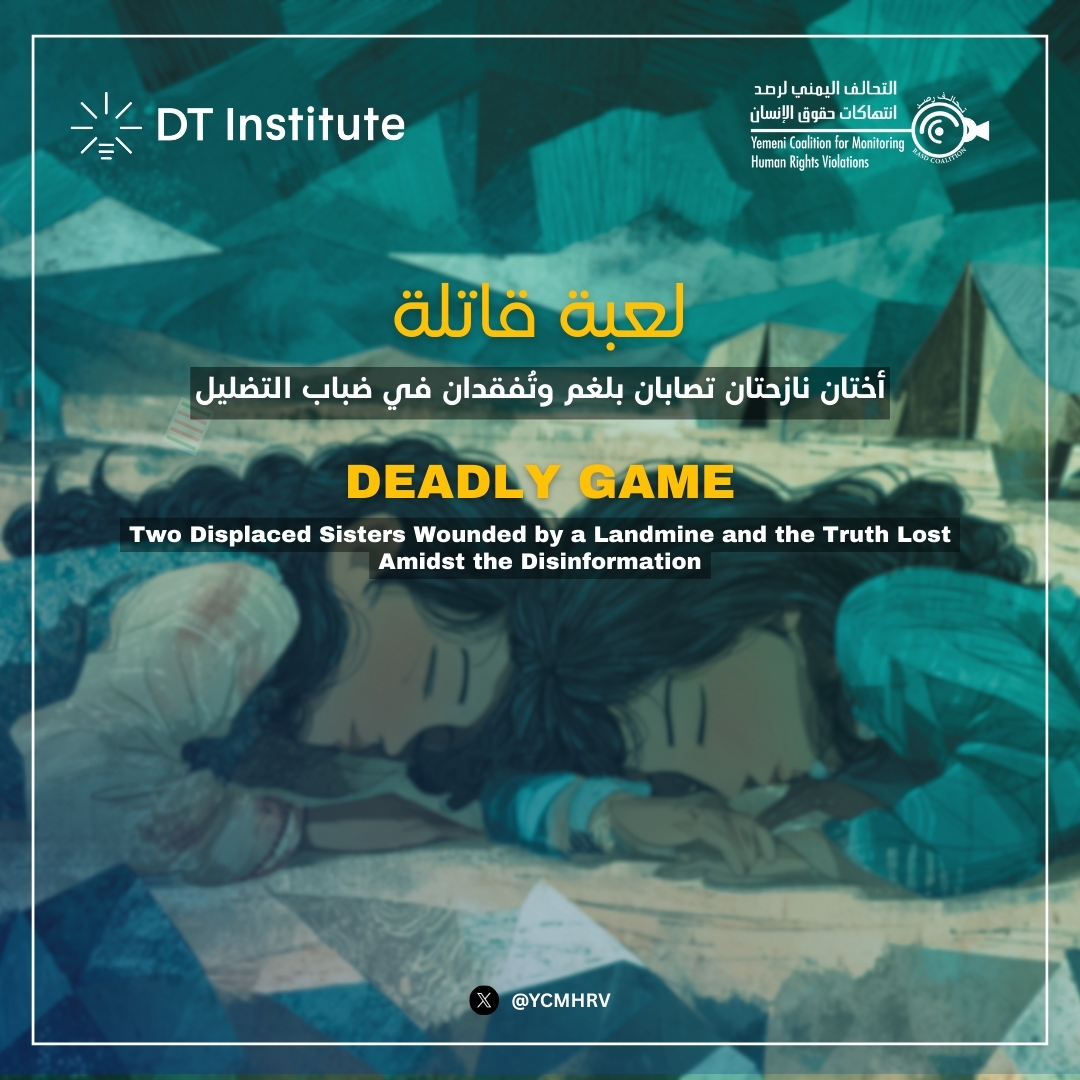
Injury of Two Girls by a Landmine Explosion in Abyan |
Date: |
January 11, 2025 |
Location: |
Hosn Saeed camp, Shuqra District, Abyan Governorate |
Type of Violation: |
Injury by Explosion |
Introduction:
For Iman Amin Zaher (6) and her sister Mariam (8), who were displaced from Hodiedah by the war, the Hosn Saeed camp in Abyan was intended to be a place of safety. Yet on January 11, 2025, that refuge revealed a hidden and deadly threat. While playing near their camp, the girls were severely injured by an unexploded ordnance—an object they did not recognize as lethal. Although the tragedy itself was unmistakable, the origin of the device and the question of responsibility were quickly clouded by a familiar pattern of information warfare.
Information Warfare
The pro-Houthi channel Yemen Today reported the incident, but its coverage was contradictory and vague. The report oscillated between labeling the device as a “bomb” and as unexploded remnants of what it called “the aggression”—a term the group uses to refer to munitions from the Saudi-led Arab Coalition, whose combat operations in Yemen ceased over three years ago, following the April 2022 truce. This terminology is carefully crafted to deflect blame and obscure the true origin of the explosive device.
In contrast, the police force in Shuqra district—under the internationally recognized government—issued a clear and direct statement. It confirmed the injury of the two displaced girls and identified the cause as a “landmine planted by Houthi militias” during previous clashes with government forces. This statement directly challenges the narrative promoted by Houthi media and points to the group’s responsibility for the lingering explosive hazards across Yemen.
A Contaminated Landscape
This incident underscores a devastating reality for millions of Yemenis, especially children: the country is littered with explosive remnants of war. While the primary responsibility for planting these mines lies with the Houthis group, Rasd Coalition also highlights the duty of the internationally recognized government to intensify demining efforts and, crucially, to conduct public awareness campaigns in areas under its control—particularly in displacement camps often located near former frontlines. Families fleeing conflict should not find themselves in new zones of danger.
A Double Tragedy
Iman and Mariam’s injuries represent a dual tragedy. First, the physical and psychological trauma caused by the explosion. Second, the informational trauma inflicted by conflicting reports that exploit their suffering for political gain. The use of vague terms like “remnants of aggression” is not a minor detail—it is a calculated tactic of disinformation designed to evade accountability. It creates doubts around every incident, ensuring that victims are not only harmed by conflict but also denied a clear understanding of its source.
Rasd Coalition calls for renewed focus on demining and accountability for all parties responsible for the deadly legacy they leave behind.
Disinformation as a Globalized Weapon
Disinformation in wartime has historical roots and has evolved with modern tools, and deployed techniques such as:
- Direct fabrication: Spreading false claims (e.g., Houthi allegations of “coalition remnants”)
- Context manipulation: Presenting partial truths while omitting critical details (e.g., ignoring Houthi responsibility for mine-laying)
Today, these tactics have been amplified through social media, where bots and fake accounts spread false narratives six times faster than verified facts (Oxford University, 2024).
In Yemen, the Houthi model of disinformation—termed “soft warfare”—has been documented by the Yemen Policy Center (2024) as involving:
- Media monopoly: Blocking 120 opposition websites and controlling 90% of local outlets
- Narrative militarization: Justifying violence by portraying victims as “enemies” (e.g., claiming children were injured by “coalition mines”)
- Rejection of international investigations to avoid accountability (UN report)
This model aligns with warnings from Human Rights Watch: “Disinformation in conflict zones increases civilian deaths by 40%, as it obstructs rescue and clearance operations” (2023).
Disinformation as a Compound Crime
Multiple international studies confirm that disinformation in war:
- Institutionalizes impunity: 78% of crimes surrounded by disinformation are never investigated by the UN
- Kills twice: Physically—by delaying medical aid; and morally—by distorting victims’ reputations
Disinformation is not mere falsehood—it is a weapon of mass destruction that prolongs conflict. As UN war crimes expert Dr. Elena Garcia states:
“When truth is stolen… justice is killed in its cradle.”
Conclusion
The case of Iman and Mariam Zaher is not a simple wartime tragedy—it is a stark illustration of a calculated modern military strategy. The initial physical violence of the explosion is deliberately compounded by a second assault: informational confusion designed to blur responsibility and paralyze justice.
As the report shows, this is not an isolated incident but part of a sophisticated tactic with historical precedents now adapted to the digital age. The goal is to create a permanent state of impunity by systematically dismantling the factual record—ensuring every victim is violated twice and every crime erased and perpetrators absolved.
Combating this “deadly mechanism of killing” requires a shift in international response. Traditional human rights documentation must now be intrinsically linked to digital investigation and disinformation analysis. The UN and relevant legal bodies must develop protocols to swiftly debunk false narratives and explicitly include information operations as part of war crimes investigations. Social media platforms must be held accountable for the role their algorithms play in amplifying conflict-related disinformation.
Ultimately, defending truth is no longer just a moral imperative—it is a strategic necessity to protect civilians, ensure accountability, and pave any viable path toward a just peace in Yemen
الحادثة: |
اصابة طفلتين نتيجة انفجار جسم من مخلفات الحرب في ابين |
التاريخ: |
11 يناير 2025 |
مكان الواقعة: |
مخيم للنازحين بقرية حصن سعيد بمديرية شقرة في محافظة ابين |
نوع الانتهاك: |
إصابة بانفجار جسم |
المقدمة
بالنسبة لإيمان أمين زاهر (6 سنوات) وأختها مريم (8 سنوات)، النازحتين من الحديدة بسبب الحرب، كان من المفترض أن يكون مخيم حصن سعيد في أبين ملاذاً آمناً. ومع ذلك، في 11 يناير 2025، كشف ذلك الملاذ عن تهديد مميت خفي. أصيبت الفتاتان بجروح خطيرة جراء انفجار ذخيرة غير منفجرة، أثناء لعبهما قرب مأواهما، وهي عبارة عن جسم لم تعرفاه على أنه قاتل. وبينما الحادثة المأساوية بحد ذاتها واضحة، فإن قصة ما انفجر ومن المسؤول أصبحت على الفور ضبابية بسبب نمط مألوف من حرب المعلومات.
حرب المعلومات:
قامت القناة الموالية للحوثيين "اليمن اليوم" بالإبلاغ عن الحدث، لكن تغطيتها كانت متناقضة وغامضة. في تقريرها، تذبذبت بين وصف الجسم على أنه "قنبلة" وجسم حربي غير منفجر من مخلفات ما اسمته بـ "العدوان" – وهو مصطلح تستخدمه الجماعة للإشارة إلى الذخائر من التحالف العربي الذي تقوده السعودية والذي توقفت اعماله القتالية في اليمن قبل أكثر من ثلاث سنوات، وتحديد منذ الهدنة التي اعلن عنها في أبريل 2022. لذا فإن هذا المصطلح مصمم بعناية لتحويل اللوم وإخفاء المصدر الحقيقي للجهاز المتفجر.
على النقيض من قناة "اليمن اليوم"، أصدرت قوة الشرطة في مديرية شقرة – التي تخضع لسيطرة الحكومة المعترف بها دولياً – بياناً واضحاً ومحدداً. أكد البيان إصابة الفتاتين النازحتين وحدد السبب على أنه "لغم زرعته مليشيات الحوثي" اثناء خوضها قتال في المنطقة في سنوات سابقة ضد قوات الحكومة الشرعية التي سيطرت على المنطقة. هذا البيان يتحدى بشكل مباشر الرواية التي تروجها وسائل الإعلام الحوثية ويشير إلى مسؤولية الجماعة عن تناثر المخاطر المتفجرة في اليمن.
هذا الحدث يسلط الضوء على واقع مدمر لملايين اليمنيين، وخاصة الأطفال: البلاد ملوثة بمخلفات الحرب المتفجرة. وبينما تقع المسؤولية الأساسية عن زرع هذه الألغام والمتفجرات على عاتق جماعة الحوثي التي تستخدم هذا النهج، فإن "تحالف رصد" يلاحظ أيضاً أن المسؤولية تقع أيضا على عاتق الحكومة المعترف بها دولياً كونها مطالبة بتعزيز الجهود في تطهير مخلفات الحرب المتفجرة، والأهم من ذلك، القيام بحملات التوعية العامة في المناطق الخاضعة لسيطرتها، وخاصة في مخيمات النازحين التي غالباً ما تقع على خطوط المواجهة السابقة. لا ينبغي للأسر التي تهرب من الصراع أن تجد نفسها في مناطق جديدة من الخطر.
إصابة إيمان ومريم مأساة مزدوجة. الأولى هي الصدمة الجسدية والنفسية التي سببها الانفجار. الثانية هي الصدمة المعلوماتية التي تسببها التقارير المتناقضة التي تسعى إلى استغلال معاناتهما لتحقيق مكاسب سياسية. استخدام مصطلحات غامضة مثل "مخلفات العدوان" ليس تفصيلاً ثانوياً؛ إنه تكتيك تضليل محسوب للتهرب من المساءلة. يخلق ضباباً من الحرب حول كل حادثة، مما يضمن أن الضحايا لا يصابون فقط بالصراع فحسب، بل يتم أيض حرمانهم من حقيقة واضحة عن مصدر ألمهم. يدعو "تحالف رصد" إلى تركيز متجدد على العمل الإنساني لمكافحة الألغام ومحاسبة جميع الأطراف على الإرث المميت الذي يتركونه خلفهم.
التضليل الإعلامي آلية قتلٍ مُعَولَمة:
للتضليل الإعلامي في الحروب جذور تاريخية، ولكنه اليوم تطور وتستخدم فيه أدوات عصرية، بحسب دراسة لمعهد ماساتشوستس للتكنولوجيا، فإن التضليل الإعلامي في الحروب ليس جديدًا، بل يعود إلى الحرب العالمية الثانية، حيث استخدمت النازية تقنيات مثل: التضليل المباشر: نشر أخبار مختلَقة (كادعاءات الحوثيين عن "مخلفات التحالف")، والتلاعب بالسياق: تقديم معلومات صحيحة مع حذف تفاصيل حاسمة (كتجاهل مسؤولية الحوثيين على زراعة الألغام).
اليوم، تطورت هذه الآليات عبر وسائل التواصل الاجتماعي، حيث تُستخدم الحسابات الوهمية والروبوتات لنشر الروايات الكاذبة بسرعة تفوق 6 أضعاف نشر الحقائق (دراسة جامعة أكسفورد, 2024).
"الحرب الناعمة" هي التسمية ونموذج التضليل الحوثي في الحالة اليمنية، يوثق المركز اليمني للسياسات في تقرير له (2024) أن جماعة الحوثي تمارس ما تسميه "الحرب الناعمة" عبر: احتكار الإعلام: حجب 120 موقعًا معارضًا، والسيطرة على 90% من الوسائل الإعلامية المحلية، وتجييش السرديات: تبرير العنف عبر تحويل الضحايا إلى "أعداء" (كادعاء إصابة الأطفال بـ"ألغام التحالف")، ورفض التحقيقات الدولية لتفادي المساءلة (وفق تقرير الأمم المتحدة)
هذا النموذج يتوافق مع ما حذرت منه "هيومن رايتس ووتش": "التضليل في مناطق الصراع يزيد وفيات المدنيين 40%، لأنه يعيق عمليات الإنقاذ والتطهير" (2023).
يعتبر التضليل جريمة مضاعفة بحسب أدلة دولية عديدة ومختلفة، أكد بحث مشترك لجامعتي ستانفورد وهارفارد (2025) أن التضليل الإعلامي في الحروب: يُمَأسِس الإفلات من العقاب: 78% من الجرائم التي تُحاط بتضليل إعلامي لا تُحقق فيها الأمم المتحدة. ويقتل الضحايا مرتين: جسديًا: عبر تأخير الرعاية الطبية ومعنويًا: عبر تشويه سمعتهم. التضليل ليس مجرد أكاذيب، بل سلاح دمار شامل يُطيل أمد الصراعات. تقول د. إيلينا غارسيا (خبيرة جرائم الحرب في الأمم المتحدة): "عندما تُسرق الحقيقة.. تُقتل العدالة في مهدها".
الخلاصة:
قضية إيمان ومريم زاهر تتجاوز مجرد مأساة بسيطة من حرب؛ إنها توضيح صارخ لإستراتيجية عسكرية حديثة محسوبة. العنف الجسدي الأولي للانفجار يتعمد تضخيمه باعتداء معلوماتي ثانٍ مصمم لإرباك المسؤولية وشل العدالة. كما يوضح التقرير، هذا ليس حدثًا عشوائيًا ولكنه تكتيك متطور، له سوابق تاريخية تطورت للعصر الرقمي. الهدف هو خلق حالة دائمة من الإفلات من العقاب من خلال تفكيك السجل الواقعي بشكل منهجي، مما يضمن أن كل ضحية يتم انتهاكها مرتين وأن كل جريمة يتم محوها وتبرئة من ارتكابها.
مكافحة هذه "الآلية الخطيرة للقتل" تتطلب تحولا في الرد الدولي. يجب أن يرتبط توثيق حقوق الإنسان التقليدي الآن بشكل جوهري بطبقات تحقيق رقمية وتحليل مكافحة التضليل. يجب على الأمم المتحدة والهيئات القانونية ذات الصلة تطوير بروتوكولات لدحض الروايات الكاذبة بسرعة وإسناد عمليات المعلومات هذه صراحةً كجزء من تحقيقات جرائم الحرب. يجب أن تتحمل منصات التواصل الاجتماعي المسؤولية عن الدور الذي تلعبه الخوارزميات الخاصة بها في تضخيم التضليل المرتبط بالصراع. في النهاية، الدفاع عن الحقيقة لم يعد مجرد ضرورة أخلاقية بل ضرورة إستراتيجية لحماية المدنيين وتحقيق المساءلة وتمهيد أي طريق محتمل نحو سلام عادل في اليمن.