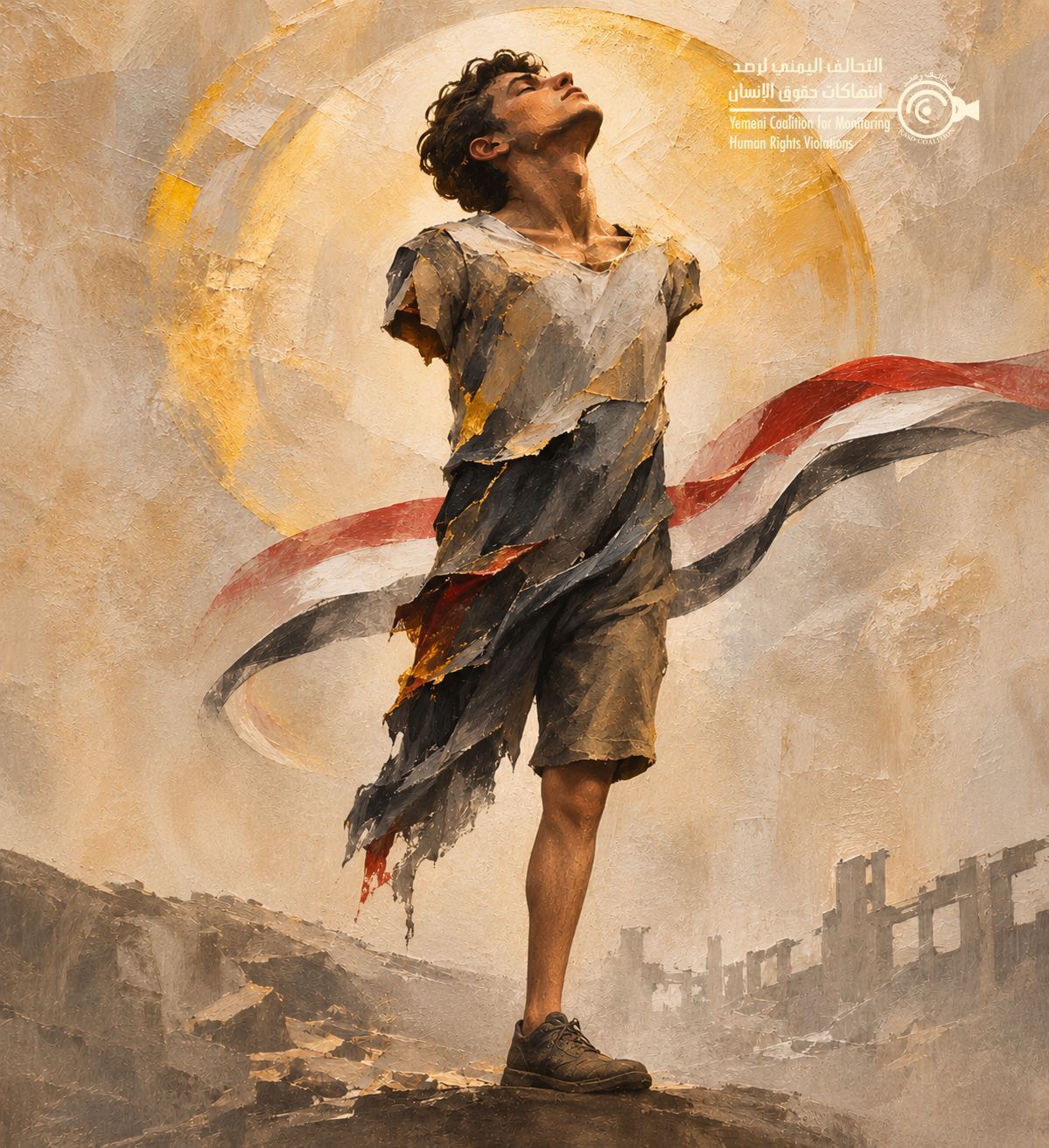
Documented Details of the Mutilation of the Bodies of Those Killed by the Houthi Group on the Jabal Sabir Frontlines
Abeer did not know that her last phone call with her husband would mark the beginning of days of waiting and searching for answers about his fate. After contact with him was lost on the Al-Arous frontline in Taiz Governorate, her wait ended before a body that had been mutilated by the Houthi group to such an extent that his family could identify him only by his personal clothing.
Raheeb Abdul Hamid Ghalib Sayyid Mar'i, 25, had returned from the coastal area, where he had been serving with the Fourth Brigade. He called his wife, Abeer Abdul Ghani, to reassure her that he was still awaiting the provision of weapons to his military unit.
Nothing in that call suggested that communication between them would subsequently cease, or that Abeer would find herself embarking on an arduous journey to determine her husband's fate and search for the recognizable features of his face and body.
Days later, Abeer was informed that the military unit had been supplied with weapons and that her husband had been transferred to the Al-Arous frontline in Jabal Sabir. Contact with him was then lost. She repeatedly attempted to reach him, but her efforts yielded no response. Meanwhile, conflicting reports about his fate began reaching the family amid armed clashes and heavy gunfire in the area.
Waiting for news was no longer enough for Abeer and Raheeb's mother. After his death was confirmed, they traveled to an area near his last known location in the village of Sanamat, attempting to reach his body. There, they saw a body lying on the ground, severely disfigured as a result of mutilation.
However, they were unable to reach it. Gunfire continued, and sniper fire threatened anyone attempting to approach the location or retrieve the body. The family returned without being able to recover his remains.
A Body Difficult to Identify
On Friday, the Yemen Red Crescent contacted the family and asked them to go to the Military Hospital in Taiz city to identify the body.
Raheeb's mother was accompanied by his brother-in-law, Abdul Aziz Abdul Ghani. At the hospital, they examined the body. According to the family's testimony, the signs of mutilation were even more apparent: the face had been severely disfigured, both ears had been cut off, and the limbs had been amputated. The family also reported that an acidic substance had been poured onto his face, substantially altering his facial features.
It was no longer possible to identify Raheeb by his facial features. Ultimately, his family could establish his identity only through his personal clothing.
The family was confronted not merely with the body of their son and husband as they had known him, but with remains that, according to their testimony, had been subjected to acts violating the sanctity of the dead and human dignity, depriving his relatives of the ability to identify him in the usual manner.
An Incident Documented by the Rasd Coalition
Following information circulated on social media concerning the mutilation of the bodies of persons killed during clashes in Taiz Governorate, the Yemeni Coalition for Monitoring Human Rights Violations (Rasd Coalition) identified the incident as a matter requiring attention and began contacting information sources and verifying the details.
As part of this process, the Coalition assigned a trained human rights researcher to visit Raheeb's family, obtain their testimonies, and collect information, documents, and evidence relating to the incident. The researcher conducted direct interviews with family members, documented their statements, and obtained visual materials relating to the condition of the body.
The information collected by the Coalition indicates that Raheeb's body was subjected to extensive mutilation involving the face, ears, and limbs. These acts warrant an independent investigation to establish the circumstances in which they occurred and identify those responsible, whom the family alleges to be members of the Houthi group.
The Dignity of the Dead Does Not End with Death
The protection afforded by international humanitarian law does not cease upon a person's death. The bodies of the deceased, including those who participated in hostilities, must be respected and protected against mutilation and other forms of abuse. They must also be collected and handled in a manner that preserves their dignity, facilitates their identification, and enables their return to their families.
International humanitarian law prohibits the mutilation of dead bodies and outrages upon the dignity of the deceased. These protections form part of the fundamental rules that parties to an armed conflict are required to respect.
The treatment of Raheeb's body, as documented through his family's testimony and the materials collected by the Rasd Coalition, warrants a serious and independent investigation to establish the circumstances of the incident, identify those responsible, and ensure that they are held accountable in accordance with the law.
For Abeer and Raheeb's family, the tragedy was not limited to the loss of a 25-year-old young man. It extended to the condition in which his body was returned, and to the difficulties his family faced in identifying him, recovering his remains, and laying him to rest with dignity.
The Coalition documented this incident systematically. It also possesses details concerning several other incidents and allegations that the Houthi group mutilated the bodies of deceased persons, including two individuals, one of whom was reportedly beheaded, while the other's heart was allegedly removed.
While the Rasd Coalition calls for the documentation of these crimes to ensure that those responsible do not escape accountability, it emphasizes that not even death gives anyone the right to strip a human being of their dignity.
(تفاصيل موثقة عن تمثيل جماعة الحوثي بجثث القتلى في جبهات جبل صبر)
لم تكن عبير تعرف أن اتصالها الأخير بزوجها سيكون بداية أيام من الانتظار والبحث عن مصيره. وبعد انقطاع أخباره في جبهة العروس بمحافظة تعز، انتهى انتظارها أمام جثمان مثلت به جماعة الحوثي، حتى لم تتمكن أسرته من التعرف عليه إلا من خلال ملابسه الشخصية.
كان رهيب عبد الحميد غالب سيد مرعي، البالغ من العمر 25 عاماً، قد عاد من الساحل حيث كان يتبع اللواء الرابع. اتصل بزوجته عبير عبد الغني ليطمئنها بأنه لا يزال ينتظر تسليح وحدته العسكرية.
لم يكن في ذلك الاتصال ما يشير إلى أن أخبارهما ستنقطع لاحقاً، وأن عبير ستجد نفسها أمام رحلة شاقة لمعرفة مصير زوجها والبحث عن ملامح وجهه وجسده.
بعد أيام، أُبلغت عبير بتسليح الوحدة العسكرية وانتقال زوجها إلى جبهة العروس جبل صبر. ثم انقطع الاتصال به. حاولت الوصول إليه مراراً، لكن المحاولات لم تسفر عن إجابة، فيما أخذت الأنباء المتضاربة عن مصيره تصل إلى الأسرة، وسط اشتباكات مسلحة وإطلاق نار كثيف في المنطقة.
لم يكن انتظار الأخبار كافياً لعبير ووالدة رهيب. ومع تأكد مقتله، توجهتا إلى منطقة قريبة من موقع وجوده في قرية صنمات في محاولة للوصول إلى جثمانه. وهناك شاهدتا جثة ملقية على الأرض، وقد تعرضت لتشويه بالغ، نتيجة التمثيل بها.
لكن الوصول إليه لم يكن ممكناً. كان إطلاق النار مستمراً، والقناصة يهددون كل محاولة للاقتراب من المكان أو سحب الجثمان. عادت الأسرة دون أن تتمكن من استعادته.
جثمان يصعب التعرف عليه:
في يوم الجمعة، تواصل الهلال الأحمر اليمني مع الأسرة، طالباً منها التوجه إلى المستشفى العسكري في مدينة تعز للتعرف على الجثمان.
رافق والدة رهيب صهره عبد العزيز عبد الغني، وهناك عاينا الجثمان. بحسب إفادة الأسرة، كانت آثار التشويه هذه المرة أكثر وضوحاً؛ فقد تعرض الوجه لتشويه بالغ، وقُطعت الأذنان، وبُترت الأطراف، فيما أفادت الأسرة بسكب مادة الأسيت على الوجه، ما أدى إلى تغيير ملامحه بصورة كبيرة.
لم يعد التعرف على رهيب ممكناً من خلال ملامح وجهه. وفي النهاية، لم تستطع أسرته الاستدلال على هويته إلا من خلال ملابسه الشخصية.
لم تكن الأسرة أمام جثمان ابنها وزوجها الذي تعرفه فحسب، بل أمام جثمان تعرض، بحسب إفادتها، لاعتداءات طالت حرمته وكرامته الإنسانية، وحرمت ذويه من التعرف عليه بصورة طبيعية.
واقعة وثقها تحالف رصد:
على إثر المعلومات التي تداولتها وسائل التواصل الاجتماعي بشأن التمثيل بجثامين قتلى في المواجهات بمحافظة تعز، وضع التحالف اليمني لرصد انتهاكات حقوق الإنسان (تحالف رصد) الواقعة ضمن اهتماماته، وبدأ التواصل مع مصادر المعلومات والتحقق من تفاصيلها.
وفي إطار ذلك، كلف التحالف باحثة حقوقية مدربة بزيارة أسرة رهيب والاستماع إلى إفاداتها وجمع المعلومات والوثائق والأدلة المتعلقة بالواقعة. وأجرت الباحثة مقابلة مباشرة مع أفراد الأسرة، ووثقت إفاداتهم، وحصلت على مواد بصرية مرتبطة بحالة الجثمان.
وتشير المعلومات التي جمعها التحالف إلى تعرض جثمان رهيب لتشويه واسع، شمل الوجه والأذنين والأطراف، وهي ممارسات تستدعي تحقيقاً مستقلاً لتحديد ظروف وقوعها والمسؤولين عنها، الذين تقول الأسرة أنهم جماعة الحوثي.
كرامة الموتى لا تسقط بالموت:
لا تتوقف الحماية التي يقررها القانون الدولي الإنساني عند لحظة وفاة الإنسان. فجثامين القتلى، بمن فيهم الذين شاركوا في الأعمال العدائية، يجب احترامها وحمايتها من التشويه والاعتداء، كما يجب جمعها والتعامل معها بطريقة تحفظ كرامتها وتتيح التعرف عليها وتسليمها إلى ذويها.
ويحظر القانون الدولي الإنساني التمثيل بالجثامين والاعتداء على كرامة الموتى، وتُعد هذه الحماية جزءاً من القواعد الأساسية التي يتعين على أطراف النزاع احترامها.
إن ما تعرض له جثمان رهيب، وفق ما وثقته إفادة أسرته والمواد التي جمعها تحالف رصد، يستوجب تحقيقاً جدياً ومستقلاً، يكشف ملابسات الواقعة ويحدد المسؤولين عنها، ويضمن مساءلتهم وفقاً للقانون.
بالنسبة إلى عبير وأسرة رهيب، لم تكن المأساة مقتصرة على فقدان شاب في الخامسة والعشرين من عمره. فقد امتدت إلى الطريقة التي عاد بها جثمانه، وإلى الصعوبة التي واجهتها أسرته في التعرف عليه واستعادته ودفنه بكرامة.
وثق التحالف هذه الواقعة بشكل منهجي، وهناك تفاصيل عن عدة وقائع أخرى وإدعاءات عن قيام جماعة الحوثي بالتمثيل بجثث بينها قتلين قيل إنه تم قطع رأس أحدهم، وإخراج قلب الآخر، وفي حين يطالب تحالف رصد بتوثيق هذه الجرائم لضمان عدم افلات الجناة فيها من العقاب، يشدد على أنه حتى الموت لا يمنح أحداً الحق في انتزاع كرامة الإنسان.