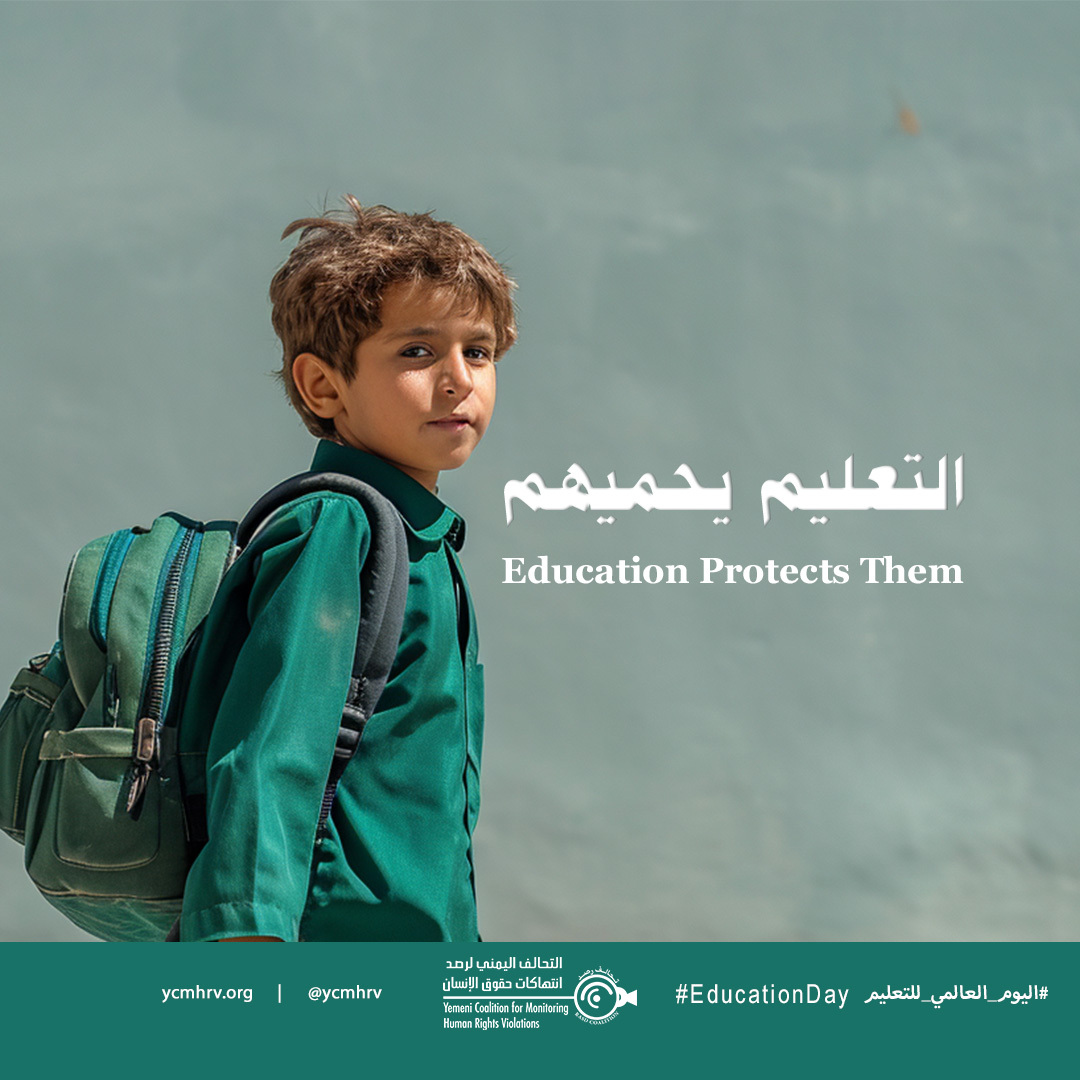
Statement on the International Education Day, January 24
Education is a basic human right and is a collective responsibility considering its public benefit and effective role in resolving conflict and building peace. We commemorate this year’s International Day of Education, on January 24, while our country, Yemen, is witnessing a humanitarian crisis due to the ongoing war and armed conflict in the country, which is entering its tenth year. This has taken its toll on millions of school-age children in Yemen who now carry rifles instead of school bags.
The years of war had a profound impact on the education sector in Yemen, as it is considered one of the most important sectors that suffered heavy losses, which led to the “intermittent education” due to the continued fighting and the inability of students to go to schools, as well as teachers who did not receive their salaries for the eighth year. According to civil society organizations reports in Yemen, 400 attacks were documented during the past four years on schools. These attacks completely or partially destroying schools and education facilities. Nearly half of girls of primary school age are deprived of education, and two out of three women in Yemen are illiterate. Internal displacement, especially in Marib Governorate, affected thousands of students who overcrowded the governorates, depriving them of quality education, and led to severe shortage of teachers and supplies, and lack of schools to accommodate them.
The war has directly affected the right to education for many children. Nearly four million boys and girls in Yemen are out of school. Moreover, the parties to the conflict in Yemen used schools for other purposes other than education, such as weapons depots, and as military barracks or training centers.
According to UNICEF, the conflict, the ongoing disruption of the education process across the country, and the fragmentation of the already collapsed education system have had a severe impact on all 10.6 million male and female school-age children in Yemen. At least 2,916 schools were destroyed, damaged, closed, or used for military or humanitarian purposes during the first seven years of the war.
The education process was subjected to interference and influence by the conflicting parties, especially the Houthis, who tried to impose their control and influence on schools, universities and educational institutions in the cities under their control. They also carried out a massive bulldozing of the education sector and a complete change of the school curricula in a way that serves the group’s thought and ideology. They also used schools for mobilization and recruitment operations and encouraged children to engage in military operations.
Education in Yemen is an urgent humanitarian and development issue, requiring urgent and sustainable intervention to save generations of children from ignorance, poverty, violence, and loss of the future. Yemen needs the combined efforts of the relevant authorities and local and international support to rebuild a comprehensive and safe educational system. The inability and division of national justice and accountability mechanisms has encouraged the parties to the conflict to carry out more attacks against the education sector. Justice will not be achieved unless there are criminal accountability mechanisms against all perpetrators of violations, especially in light of the continuing state of impunity enjoyed by perpetrators of violations.
We call on the international community, the sponsor of peace process in Yemen and the United Nations system to continue efforts to reform and support the education sector in Yemen. We also call on the parties to the conflict to implement and strengthen measures aimed at protecting children from recruitment into the armed forces. And work to immediately release all children currently involved in military activities and ensure their rehabilitation and integration into society.
We also urge Houthis group to refrain from ideological amendments on the school’s curriculum and emphasizing on the importance of maintaining the neutrality of education and ensuring that schools remain independent and unbiased spaces.
Signatories:
- The Yemeni Coalition for Monitoring Human Rights Violations (YCMHRV).
- Watch for Human Rights
- Abductees’ Mothers Association (AMA)
- Al-Amal Women’s and Sociocultural Foundation (AWS)
- Center for Strategic Studies to Support Women and Children (CSWC)
- Free Media Center for Investigative Journalism
- Marib Dam Foundation for Social Development (MDF)
- Musaala Organization
- SAM Organization for Rights and Liberties
- Studies and Economic Media Center (SEMC)
بيان صادر عن منظمات المجتمع المدني اليمني بمناسبة اليوم الدولي للتعليم 24 يناير
يعتبر التعليم حقا أساسيا من حقوق الإنسان ويعتبر مسؤولية جماعية لما له من منفعة عامة ودور فعال في حل النزاع وبناء السلام. وتأتي مناسبة الاحتفال باليوم الدولي للتعليم الذي يصادف 24 كانون الثاني/ يناير من كل عام وبلادنا اليمن لا تزال تشهد أزمة إنسانية بفعل الحرب والنزاع المسلح بين أطراف الصراع في البلاد والذي يدخل عامه العاشر. وهو ما ألقي بأوزاره على ملايين الأطفال في اليمن في سن التعليم والذين أصبحوا يحملون البنادق بدلا من حقائب المدرسة.
فقد كان لسنوات الحرب تأثيرا بالغا على قطاع التعليم في اليمن إذ يعتبر وأحدا من أهم القطاعات التي تعرضت لخسائر فادحة وهو ما أدى إلى ظهور (التعليم المتقطع) في البلاد بسبب استمرار القتال وعدم تمكن الطلاب من الذهاب الى مدارسهم وكذلك المعلمين اللذين لم يستلموا رواتبهم للعام الثامن. وبحسب احصائيات المجتمع المدني باليمن فقد تم تسجل 400 اعتداء خلال الأربعة السنوات الماضية على المدارس. دمرت تلك الاعتداءات المدارس كليًا أو جزئيا. وقد حرم ما يقارب نصف الفتيات اللواتي في سن التعليم الابتدائي من التعليم، وهناك اثنتان من أصل ثلاث نساء في اليمن أميات وأثر النزوح الداخلي وخاصة في محافظة مارب على الاف الطلاب اللذين اكتظت بهم المحافظات مما أدى الى حرمانهم من جودة التعليم ونقص شديد بالمدرسين والمستلزمات وعدم وجود مدارس تستوعبهم.
وأثرت الحرب بشكل مباشر على الحق في التعليم لدى العديد من الأطفال، فلا يزال قرابة أربعة مليون طفل وطفلة في اليمن خارج المدارس. كما استخدمت أطراف الصراع في اليمن المدارس لأغراض اخرى غير التعليم مثل تخزين الأسلحة وكثكنات عسكرية او مراكز تدريب.
وبحسب منظمة اليونيسف فقد كان للنزاع والتعطيل المستمر للعملية التعليمية في جميع أنحاء البلاد وتجزئة نظام التعليم شبه المنهار أصلا تأثيرا بالغا على كافة الأطفال في سن التعليم البالغ عددهم 10,6 مليون طالب وطالبة في اليمن. إذ ان ما لا يقل عن 2916 مدرسة دُمرت أو تضررت أو أغلقت أو استخدمت لأغراض عسكرية أو إنسانية خلال السبع السنوات الأولى من الحرب.
وتعرضت العملية التعليمية للتدخل والتأثير من قبل الأطراف المتنازعة، وخاصة الحوثيين، الذين حاولوا فرض سيطرتهم ونفوذهم على المدارس والجامعات والمؤسسات التعليمية في المدن الواقعة تحت سيطرتها كما قاموا بتجريف واسع لقطاع التعليم وتغيير كامل للمناهج الدراسية بما يخدم فكر وأيدولوجيا الجماعة. كما استخدموا المدارس في عمليات التحشيد والتجنيد وشجعوا الأطفال على الانخراط في العمليات العسكرية.
قضية التعليم في اليمن هي قضية إنسانية وتنموية ملحة، تتطلب التدخل العاجل والمستدام لإنقاذ جيل كامل من الأطفال من الجهل والفقر والعنف وضياع المستقبل وتحتاج اليمن إلى تكاتف جهود الجهات ذات الصلة ودعم محلي ودولي لإعادة بناء نظام تعليمي شامل وآمن. ان عجز وانقسام اليات العدالة والمساءلة الوطنية شجع أطراف الصراع على المزيد من الهجمات ضد قطاع التعليم، لن تتحقق العدالة إلا بوجود آليات مساءلة ذات بعد جنائي لكافة مرتكبي الانتهاكات خاصة في ظل استمرار حالة الإفلات من العقاب التي يتمتع بها مرتكبي الانتهاكات لهذا نطالب المجتمع الدولي الراعي لعمليات السلام باليمن ومنظومة الأمم المتحدة بمواصلة الجهود لإصلاح ودعم قطاع التعليم في اليمن. كما نطالب أطراف النزاع بتنفيذ وتعزيز التدابير الرامية إلى حماية الأطفال من التجنيد في القوات المسلحة. والعمل على إطلاق سراح أي أطفال منخرطين حالياً في الأنشطة العسكرية فوراً وضمان إعادة تأهيلهم وإدماجهم في المجتمع.
كما نحث جماعة الحوثي على الامتناع عن إجراء تعديلات أيديولوجية على المناهج التعليمية والتأكيد على أهمية الحفاظ على حيادية التعليم وضمان بقاء المدارس مستقلة وغير منحازة.
الموقعون :
- التحالف اليمني لرصد انتهاكات حقوق الانسان باليمن تحالف رصد (YCMHRV).
- منظمة رصد لحقوق الإنسان
- رابطة أمهات المختطفين (AMA)
- مؤسسة الأمل الثقافية الإجتماعية النسوية (AWS)
- مركز الدراسات الإستراتيجية لدعم المرأة والطفل (CSWC)
- مركز الإعلام الحر للصحافة الاستقصائية
- مؤسسة سد مأرب للتنمية الاجتماعية (MDF)
- منظمة مساءلة
- منظمة سام للحقوق والحريات
- مركز الدراسات والاعلام الاقتصادي (SEMC)