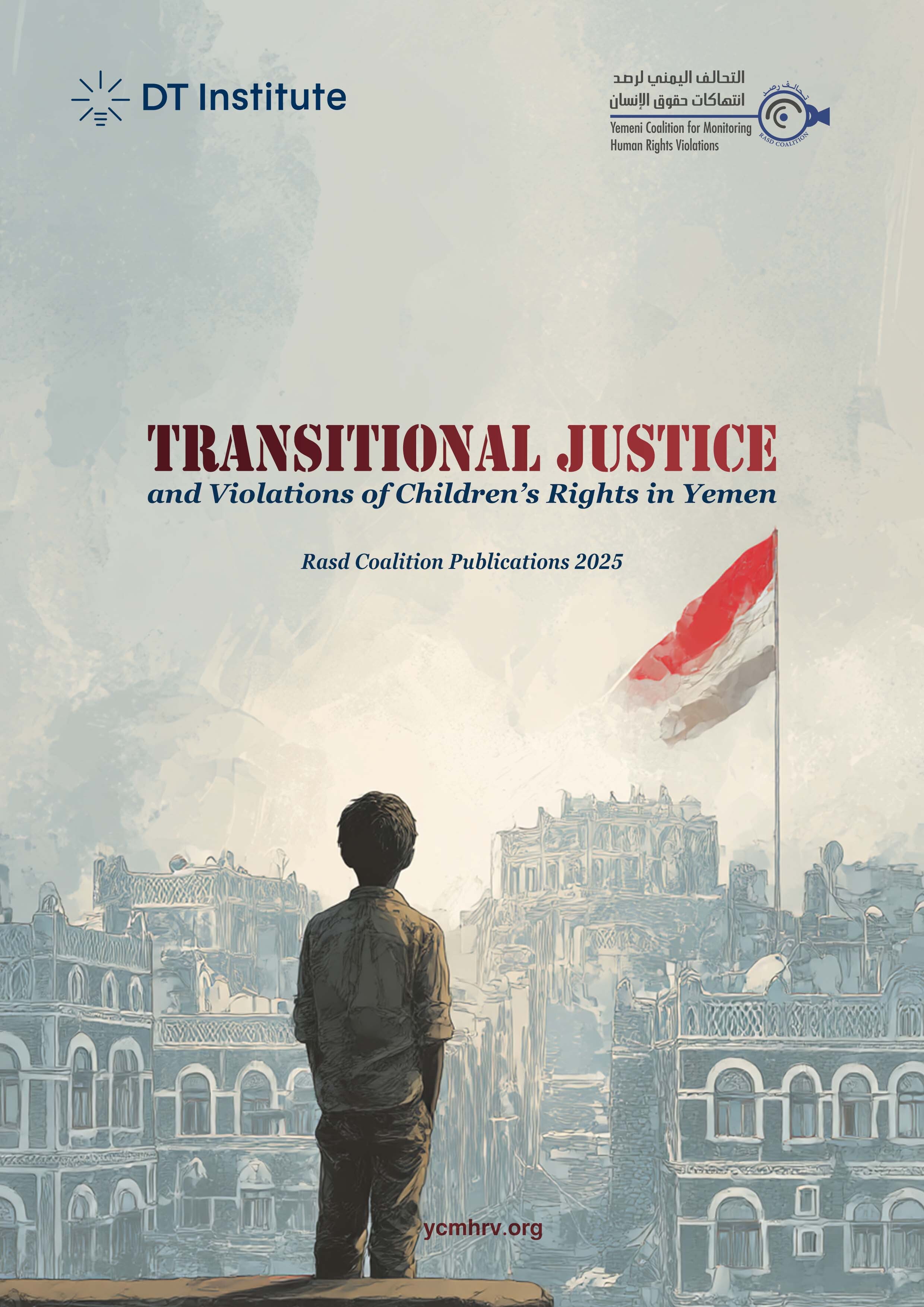
The UN Special Rapporteur on Truth, Transitional Justice and Guarantees of Non-Recurrence, Bernard Duhaime, praised the study issued by the Yemeni Coalition for Monitoring Human Rights Violations (Rasd Coalition) on Transitional Justice and Violations of Children's Rights in Yemen, stressing that documenting violations and collecting evidence represent "the foundation of any successful transitional justice process."
Duhaihem spoke at a webinar organized by the Yemeni Coalition for Monitoring Human Rights Violations (Rasd Coalition), in partnership with the DT Institute, on Tuesday, October 14.
The Webinar was organized to launch the study titled “Transitional Justice and Violations of Children’s Rights in Yemen”, which is considered one of the most comprehensive human rights studies addressing the situation of children in the context of the ongoing Yemeni conflict since 2014, from a transitional justice and human rights perspective. The study revealed the extent of the grave violations to which children are subjected in Yemen, as they represent the group most affected by the ongoing war, given the poor legal and institutional frameworks for their protection.
The Webinar was attended by prominent local and international human rights experts and activists, with interventions emphasizing the importance of documenting violations, redressing harm, and providing justice for children affected by the ongoing war since 2014.
In his opening remarks, Mutahhar Al-Bathiji, Executive Director of the Rasd Coalition, emphasized that transitional justice represents "a path towards sustainable peace," emphasizing that children are the most vulnerable and most affected group by the conflict. Al-Bathiji said, "There is a need for accurate documentation of violations against children, redressing harm, and reforming child protection institutions. Affected children and their families must also be included in peace negotiations, because ignoring their suffering entrenches impunity."
Sahar Mohammed, a representative of the DT Institute, explained that the goal of the project and study is to promote and protect children's rights and raise local and international awareness of the extent of the violations they are subjected to. She said, "We are working to enhance participation and cooperation with all parties—the public, private, and civil society sectors—to ensure an environment that protects children from the implications of the conflict and restores their safety and dignity."
In his presentation, Judge Mohammed Al-Hatar, the study's author and a specialist in transitional justice and human rights, said that the study examines the reality of protecting children's rights in Yemen during the ongoing conflict since 2014, by analyzing the legal and institutional framework, monitoring patterns of violations and their multiple impacts, and evaluating local and international responses. He added that the study was based on the premise that the conflict has created an unprecedented humanitarian crisis that has made children the most affected group, requiring a comprehensive approach to address violations and establish guarantees of non-recurrence.
In his remarks, the UN Special Rapporteur on truth, transitional justice, and guarantees of non-recurrence, Bernard Duhaime, praised the efforts of the Rasd coalition, considering the study "unique in Yemen," as it provided new evidence and highlighted the voices of victims. The UN Special Rapporteur said, "I commend the work of Rasd Coalition in gathering evidence of human rights violations. This report should spark a broad national dialogue and strengthen our collective commitment to children affected by conflict, whether in Yemen, Gaza, Sudan, or elsewhere."
He added that the judicial system in Yemen remains ineffective, and that children are subjected to ongoing violations without accountability or effective redress. He called for the prosecution of violators and the guarantee of comprehensive justice. He noted that the Human Rights Council and relevant UN bodies support the work of Rasd Coalition, and that the study will be presented and discussed during the next session of the Human Rights Council.
The UN official concluded his remarks by saying, "Recognizing, investigating, and punishing perpetrators of violations against children is not just a humanitarian obligation; it is a prerequisite for building justice and a healthy society."
In her remarks on international advocacy, Dr. Lynn Arbeed of the DT Institute emphasized that one of the study's main objectives is to support victims and prevent impunity through effective coordination and the strong will of local and international institutions. She said, "Yemeni civil society has a pivotal role in monitoring, documenting, and advocating, and in amplifying the voices of victims within the peace negotiations. Voices that are not heard are an open wound in the path of justice." She noted that the study revealed a lack of awareness of transitional justice among those affected by the war, calling for support for institutional and legal efforts that protect children's rights and build an effective and sustainable protection system.
Basem Al-Haj, First Secretary of the Yemeni Social Party in Taiz Governorate, spoke, noting that political differences continue to hinder the issuance of the Transitional Justice and National Reconciliation Law, which was proposed a decade ago. Al-Haj said, "There are political forces that strongly opposed the issuance of the Transitional Justice Law, and this challenge persists to this day, representing a stumbling block to achieving a comprehensive and sustainable peace."
The study emphasized that since the outbreak of war in September 2014, Yemen has become one of the worst humanitarian crises in the world, and children have paid the heaviest price. UN reports indicate that approximately 9.8 million children need urgent humanitarian assistance, more than 2.7 million children are suffering from severe malnutrition, and more than 11,500 children have been killed or maimed by the end of 2024. However, the actual numbers are likely to be much higher due to the lack of effective national monitoring mechanisms.
According to the study, all parties to the conflict have committed grave violations against children, including forced recruitment, sexual violence, and attacks on schools and hospitals, denial of humanitarian aid, abduction, and enforced disappearance.
Education is one of the most affected sectors; more than two million children have lost access to school, and 3,000 schools have been destroyed or used militarily.
The study relied on a mixed methodology that combined legal and institutional analysis with field surveys that included 77 victims and their families, 13 organizations working in the field of children's rights, and 14 representatives of political parties and groups.
The sample focused geographically on Taiz Governorate and areas controlled by the internationally recognized government, noting the difficulty of accessing areas controlled by the Ansar Allah group (Houthis) for security reasons.
The study also compared Yemeni legislation with the country's international obligations and reviewed the experiences of other countries in integrating childhood issues into transitional justice processes, to draw lessons applicable to the Yemeni context.
The results showed that the Yemeni legal framework for protecting children's rights is extremely weak. 73.3% of participants believe it does not provide the minimum level of protection, while 79.7% rated the performance of government institutions as weak or very weak.
The study identified serious legal gaps, most notably: the absence of explicit provisions criminalizing child recruitment, the failure to set a minimum age for marriage in line with international standards, weak penalties for crimes of sexual violence and exploitation, and the conflicting laws and multiple legislative authorities since the outbreak of the conflict.
It also revealed that most state institutions concerned with childhood—such as the Supreme Council for Motherhood and Childhood—have ceased to function, and that national protection plans are dependent on funding from donors and international organizations. Meanwhile, the role of civil society is limited to documentation efforts and limited psychological and educational support due to weak funding and the politicization of human rights activism. Widespread Violations and a multiplier impact on girls
Among the study's most prominent findings is that child recruitment is the most prevalent violation, accounting for 88.7% of the total, followed by killing and injury (61.7%), sexual violence (51%), attacks on schools and hospitals (50%), abduction (35.3%), and denial of humanitarian aid (51.4%).
The study found that girls, children with disabilities, and displaced children are the most vulnerable and exposed to violations, due to the intersection of gender, economic status, and geographic location. This places Yemeni children in a complex confrontation with violence, poverty, and exclusion.
The study noted that psychological effects are at the forefront of the repercussions of violations, followed by physical injuries and loss of educational opportunities. In the long term, psychological and social trauma, isolation, the breakdown of family trust, and the growth of violent tendencies are prominent. These factors portend the replication of conflict in the future if not addressed at its social and legal roots.
The study is among the first Yemeni studies to link children's issues to the transitional justice process. It notes that the political discourses of political parties and groups remain divided: "While some actors support documenting violations, reparations, and institutional reform, others ignore or politicize children's issues, threatening the inclusiveness of any future transitional justice process."
The study argues that justice for children is a prerequisite for any genuine national reconciliation, and that addressing violations against them must go beyond relief to comprehensive legislative and institutional reform that ensures accountability and non-recurrence.
The study concludes that the success of any transitional justice process in Yemen depends on making child protection a national priority through legal and institutional reforms, activating reparations mechanisms, engaging civil society in monitoring and accountability, and ensuring psychological support and reintegration services. It also calls for strengthening legal accountability for violations, establishing independent mechanisms to address war crimes against children, and building a child-friendly transitional justice system based on the principles of non-impunity and non-recurrence. This study comes at a critical moment during the Yemeni war, refocusing attention on one of the most pressing issues—protecting children from grave violations—and providing decision-makers with a comprehensive roadmap toward redressing child victims and empowering them as partners in building a peaceful future in Yemen.
Download here>> https://ycmhrv.org/publication...
تعز – 14 أكتوبر 2025
أشاد المقرر الخاص للأمم المتحدة المعني بالحقيقة والعدالة الانتقالية وضمان عدم التكرار بيرنارد دوهايهم بالجهود التي بذلها التحالف اليمني لرصد انتهاكات حقوق الإنسان (تحالف رصد) في إعداد دراسته الأخيرة حول العدالة الانتقالية وانتهاكات حقوق الأطفال في اليمن، مؤكداً أن توثيق الانتهاكات وجمع الأدلة يمثلان "الأساس لأي عملية عدالة انتقالية ناجحة".
وتحدث دوهايهم في ندوة افتراضية نضمها التحالف اليمني لرصد انتهاكات حقوق الإنسان (تحالف رصد) بالشراكة مع منظمة معهد "دي تي" (DT Institute) اليوم الثلاثاء 14 أكتوبر، واطلقا خلالها دراسة شاملة بعنوان «العدالة الانتقالية وانتهاكات حقوق الأطفال في اليمن»، تُعدّ من أوسع الدراسات الحقوقية التي تناولت أوضاع الطفولة في سياق النزاع اليمني المستمر منذ عام 2014، من منظور العدالة الانتقالية وحقوق الإنسان، وكشفت عن حجم الانتهاكات الجسيمة التي يتعرض لها الأطفال في اليمن، باعتبارهم يمثلون الفئة الأكثر تضرراً من الحرب المستمرة، في ظل ضعف الإطارين القانوني والمؤسسي لحمايتهم.
قيادات حقوقية محلية دولية عن العدالة الانتقالية والأطفال في اليمن
شهدت ندوة إطلاق الدراسة الجديدة حول «العدالة الانتقالية وانتهاكات حقوق الأطفال في اليمن»، حضورًا حقوقيًا وأمميًا بارزًا، ومداخلات أكدت على أهمية توثيق الانتهاكات وجبر الضرر وإنصاف الأطفال المتضررين من الحرب المستمرة منذ عام 2014.
في كلمته الافتتاحية، أكد مطهر البذيجي، المدير التنفيذي لتحالف رصد، أن العدالة الانتقالية تمثل “مسارًا نحو السلام المستدام”، مشددًا على أن الأطفال هم الفئة الأكثر هشاشة والأكثر تضررًا من النزاع. وقال البذيجي: "هناك حاجة للتوثيق الدقيق للانتهاكات ضد الأطفال، وجبر الضرر، وإصلاح مؤسسات حماية الطفولة. كما يجب إشراك الأطفال المتضررين وأسرهم في مفاوضات إحلال السلام، لأن تجاهل معاناتهم يرسّخ الإفلات من العقاب."
من جانبها، أوضحت سحر محمد، ممثلة معهد DT Institute، أن الهدف من المشروع والدراسة يتمثل في تعزيز وحماية حقوق الأطفال، ورفع الوعي المحلي والدولي بحجم الانتهاكات التي يتعرضون لها. وقالت: "نحن نعمل على تعزيز المشاركة والتعاون مع الجميع — من القطاع العام والخاص والمجتمع المدني — لضمان بيئة تحمي الأطفال من آثار النزاع وتعيد لهم الأمان والكرامة."
وخلال استعراضه لمضمون الدراسة، قال القاضي محمد الهتار، معد الدراسة والمتخصص في العدالة الانتقالية وحقوق الإنسان، إن التقرير يستعرض واقع حماية حقوق الأطفال في اليمن خلال النزاع المستمر منذ عام 2014، من خلال تحليل الإطار القانوني والمؤسسي، ورصد أنماط الانتهاكات وآثارها المتعددة، وتقييم الاستجابات المحلية والدولية. وأضاف أن الدراسة انطلقت من خلفية تؤكد أن النزاع أفرز أزمة إنسانية غير مسبوقة جعلت الأطفال الفئة الأكثر تضررًا، ما يتطلب تبني مقاربة شاملة تعالج الانتهاكات وتؤسس لضمانات عدم تكرارها.
وفي مداخلته أشاد المقرر الخاص للأمم المتحدة المعني بالحقيقة والعدالة الانتقالية وضمان عدم التكرار بيرنارد دوهايهم بجهود تحالف رصد، معتبرًا أن الدراسة “فريدة من نوعها في اليمن”، إذ قدّمت أدلة جديدة وأبرزت أصوات الضحايا. وقال المقرر الأممي: "أحيي العمل الذي قام به تحالف رصد في جمع الأدلة حول انتهاكات حقوق الإنسان. هذا التقرير يجب أن يطلق حوارًا وطنيًا واسعًا ويعزز التزامنا الجماعي تجاه الأطفال المتأثرين بالنزاع، سواء في اليمن أو في غزة أو في السودان أو في أي مكان آخر."
وأضاف أن النظام القضائي في اليمن لا يزال غير فاعل، وأن الأطفال يتعرضون لانتهاكات مستمرة دون مساءلة أو جبر ضرر فعّال، داعيًا إلى محاكمة المنتهكين وضمان العدالة الشاملة، مشيرا إلى أن مجلس حقوق الإنسان وهيئات الأمم المتحدة المعنية تدعم عمل تحالف رصد، وأن الدراسة سيتم عرضها ومناقشتها ضمن الدورة القادمة لمجلس حقوق الإنسان.
وختم المسؤول الأممي مداخلته بالقول: "الاعتراف والتحقيق ومعاقبة مرتكبي الانتهاكات ضد الأطفال ليس مجرد التزام إنساني، بل هو شرط أساسي لبناء العدالة وبناء مجتمع سليم."
وفي مداخلتها حول المناصرة الدولية، أكدت الدكتورة لين عربيد من معهد DT Institute أن أحد الأهداف الرئيسية للدراسة هو دعم الضحايا والحيلولة دون الإفلات من العقاب، من خلال التنسيق الفعّال والإرادة الجادة للمؤسسات المحلية والدولية. وقالت: "هناك دور محوري للمجتمع المدني اليمني في الرصد والتوثيق والمناصرة، وفي تضخيم أصوات الضحايا داخل مفاوضات السلام. الأصوات التي لا تُسمع هي جرحٌ مفتوح في مسار العدالة."، ونوهت إلى أن الدراسة كشفت عن ضعف الوعي بالعدالة الانتقالية بين المتضررين من الحرب، داعية إلى دعم الجهود المؤسسية والقانونية التي تصون حقوق الأطفال وتبني نظام حماية فاعل ومستدام.
وتحدث باسم الحاج، السكرتير الأول لمنظمة الحزب الاشتراكي اليمني في محافظة تعز، مشيرًا إلى أن الخلافات السياسية لا تزال تعرقل صدور قانون العدالة الانتقالية والمصالحة الوطنية الذي تم طرحه قبل عقد من الزمن. وقال الحاج: "هناك قوى سياسية عارضت بشدة إصدار قانون العدالة الانتقالية، ولا يزال هذا التحدي قائمًا حتى اليوم، مما يشكل حجر عثرة أمام الوصول إلى سلام شامل ومستدام."
سياق الدراسة: الطفولة في قلب النزاع اليمني
منذ اندلاع الحرب في سبتمبر 2014، تحوّلت اليمن إلى واحدة من أسوأ الأزمات الإنسانية في العالم، ودفع الأطفال الثمن الأكبر. تشير تقارير الأمم المتحدة إلى أن نحو 9.8 مليون طفل بحاجة إلى مساعدات إنسانية عاجلة، وأن أكثر من 2.7 مليون طفل يعانون من سوء تغذية حاد، فيما قُتل أو شُوّه أكثر من 11,500 طفل حتى نهاية 2024، بينما يُرجّح أن تكون الأرقام الحقيقية أعلى بكثير نتيجة غياب آليات رصد وطنية فعالة.
وبحسب الدراسة، فإن جميع أطراف النزاع ارتكبت انتهاكات جسيمة بحق الأطفال، شملت التجنيد القسري، والعنف الجنسي، والهجمات على المدارس والمستشفيات، والحرمان من المساعدات الإنسانية، والاختطاف والإخفاء القسري.
ويُعدّ التعليم من أكثر القطاعات تضرراً؛ إذ فقد أكثر من مليوني طفل إمكانية الالتحاق بالمدارس، وتعرضت 3,000 مدرسة للدمار أو الاستخدام العسكري.
منهجية الدراسة: مقاربة تحليلية ميدانية
اعتمدت الدراسة على منهجية مختلطة جمعت بين التحليل القانوني والمؤسسي، والاستبيانات الميدانية التي شملت 77 فرداً من الضحايا وأسرهم، و13 مؤسسة عاملة في مجال حقوق الطفل، و14 ممثلاً عن الأحزاب والمكونات السياسية.
وركّزت العينة جغرافياً على محافظة تعز ومناطق سيطرة الحكومة المعترف بها دولياً، مع الإشارة إلى صعوبة الوصول إلى مناطق سيطرة جماعة أنصار الله (الحوثيين) لأسباب أمنية.
كما قارنت الدراسة بين التشريعات اليمنية والتزامات البلاد الدولية، واستعرضت تجارب دول أخرى في دمج قضايا الطفولة ضمن مسارات العدالة الانتقالية، بغرض استخلاص دروس قابلة للتطبيق في السياق اليمني.
نتائج الدراسة: فجوة تشريعية ومؤسسية عميقة
أظهرت النتائج أن الإطار القانوني اليمني لحماية حقوق الطفل ضعيف للغاية، إذ يرى 73.3% من المشاركين أنه لا يوفر الحد الأدنى من الحماية، فيما قيّم 79.7% أداء المؤسسات الحكومية بأنه ضعيف أو ضعيف جدًا.
ورصدت الدراسة فجوات قانونية خطيرة، أبرزها: غياب نصوص صريحة تُجرّم تجنيد الأطفال، وعدم تحديد سن أدنى للزواج بما ينسجم مع المعايير الدولية، وضعف العقوبات على جرائم العنف الجنسي والاستغلال، تضارب القوانين وتعدد السلطات التشريعية منذ اندلاع النزاع.
كما بيّنت أن معظم مؤسسات الدولة المعنية بالطفولة – مثل المجلس الأعلى للأمومة والطفولة – متوقفة عن العمل، وأن الخطط الوطنية للحماية مرهونة بتمويل المانحين والمنظمات الدولية، بينما يقتصر دور المجتمع المدني على جهود توثيقية ومساندة نفسية وتعليمية محدودة بسبب ضعف التمويل وتسييس النشاط الحقوقي.
انتهاكات واسعة وأثر متضاعف على الفتيات
من بين أبرز نتائج الدراسة أن تجنيد الأطفال هو الانتهاك الأكثر انتشاراً بنسبة 88.7%، يليه القتل والإصابة (61.7%)، ثم العنف الجنسي (51%)، والهجمات على المدارس والمستشفيات (50%)، والاختطاف (35.3%)، وحرمان الأطفال من المساعدات الإنسانية (51.4%).
وجاء في الدراسة أن الفتيات والأطفال ذوي الإعاقة والنازحين هم الأكثر هشاشة وتعرضاً للانتهاكات، نتيجة تداخل النوع الاجتماعي والوضع الاقتصادي والموقع الجغرافي، مما يجعل الطفولة اليمنية في مواجهة مركّبة مع العنف والفقر والإقصاء.
وسجّلت الدراسة أن الآثار النفسية تأتي في مقدمة تداعيات الانتهاكات، تليها الإصابات الجسدية وفقدان فرص التعليم. وعلى المدى الطويل، تبرز الصدمات النفسية والاجتماعية، والعزلة، وانهيار الثقة الأسرية، وتنامي ميول العنف، وهي عوامل تنذر بإعادة إنتاج النزاع مستقبلاً إن لم تُعالج بجذور اجتماعية وقانونية.
العدالة الانتقالية: وإنصاف مؤجل وتوصيات محورية
تُعد الدراسة من أوائل الأبحاث اليمنية التي تربط بين قضايا الأطفال ومسار العدالة الانتقالية. وتشير إلى أن الخطابات السياسية للأحزاب والمكونات ما تزال منقسمة: "فبينما يؤيد بعض الفاعلين توثيق الانتهاكات وجبر الضرر وإصلاح المؤسسات، يُظهر آخرون تجاهلاً أو تسييساً لقضايا الطفولة، ما يهدد شمولية أي عملية عدالة انتقالية مستقبلية."
وترى الدراسة أن إنصاف الأطفال شرط أساسي لأي مصالحة وطنية حقيقية، وأن معالجة الانتهاكات ضدهم لا بد أن تتجاوز الإغاثة إلى إصلاح تشريعي ومؤسسي شامل يضمن المساءلة وعدم التكرار.
خلصت الدراسة إلى أن نجاح أي مسار للعدالة الانتقالية في اليمن مرهون بجعل حماية الأطفال أولوية وطنية، من خلال إصلاحات قانونية ومؤسسية، وتفعيل آليات جبر الضرر، وإشراك المجتمع المدني في الرصد والمساءلة، وضمان خدمات الدعم النفسي وإعادة الإدماج. كما دعت إلى تعزيز المساءلة القانونية عن الانتهاكات، وإنشاء آليات مستقلة لمعالجة جرائم الحرب ضد الأطفال، وبناء عدالة انتقالية صديقة للطفولة، تستند إلى مبادئ عدم الإفلات من العقاب وضمان عدم التكرار.
تأتي هذه الدراسة في لحظة حرجة من مسار الحرب اليمنية، لتعيد تسليط الضوء على واحدة من أكثر القضايا إلحاحاً — حماية الطفولة من الانتهاكات الجسيمة — وتضع أمام صانعي القرار خارطة طريق شاملة نحو إنصاف الأطفال كضحايا، وتمكينهم كشركاء في بناء مستقبل السلام في اليمن.
حملّها من هنا .. https://ycmhrv.org/publication...