Incident: |
A child injured by a landmine explosion while herding sheep |
Date: |
August 4, 2024 |
Location: |
Al Magakha Village – Al Mahliyah District – Marib Governorate |
Type of Violation: |
Planting landmines in civilian areas |
Introduction:
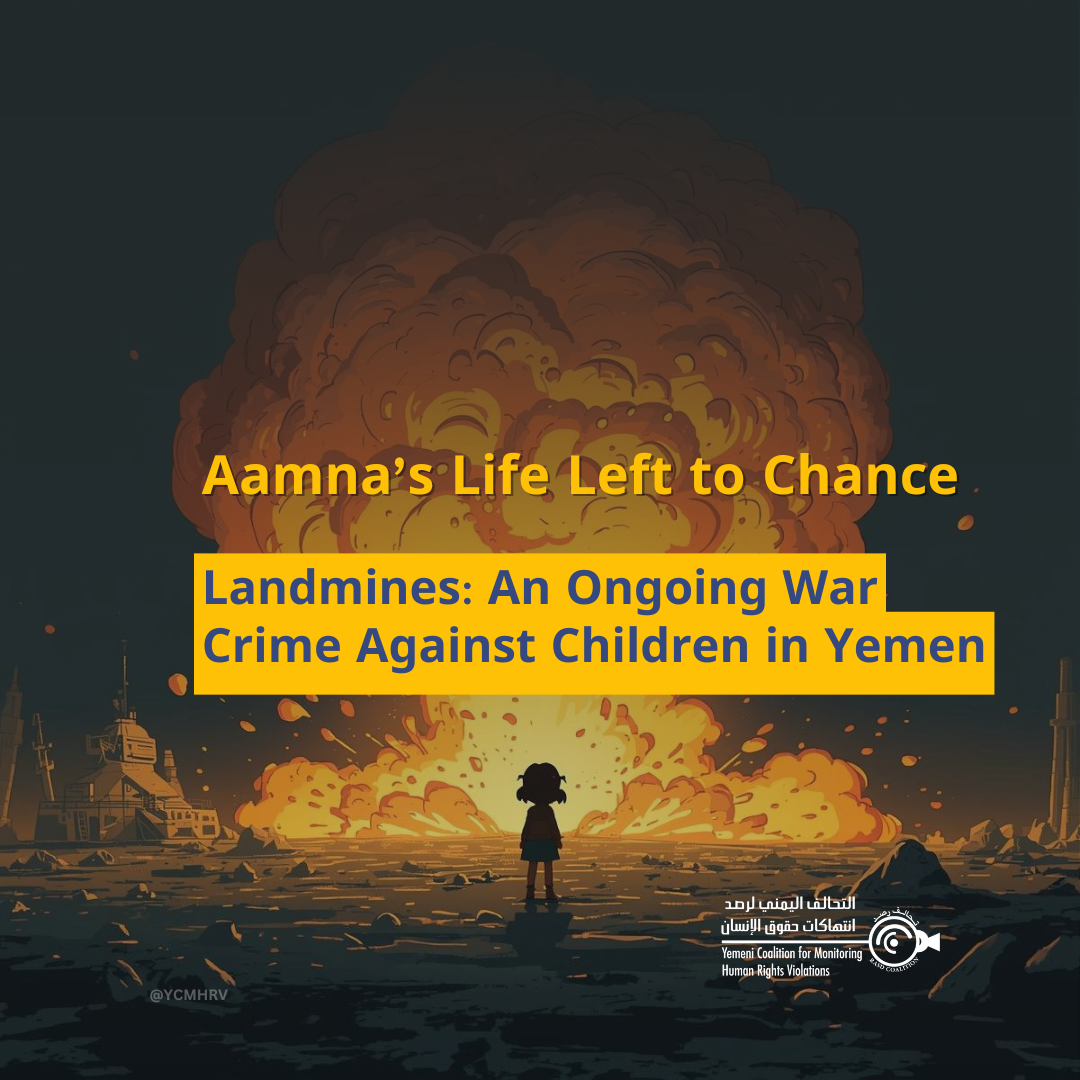
On the evening of Sunday, 4 August 2024, at around five o’clock, 14-year-old Aamna Saleh Mohammed Abdullah Al Tamahi—a fifth-grade student—was carrying out one of the most ordinary tasks in rural Yemen: herding sheep near her family’s home in the village of Al Magakha, Al Mahliyah District, Marib Governorate. She had no idea that the land she and her neighbors had walked on for years concealed a delayed death, left behind by a war that once swept through their area and abandoned its remnants in the soil.
While walking, Aamna noticed a strange metallic object among stones and discarded bags. Believing it to be a harmless piece of scrap metal, she picked it up. Moments later, it exploded in her hands. She collapsed unconscious as shrapnel tore into her face, eyes, and various parts of her body—an image that illustrates how the war continues to claim civilian lives long after the frontlines have shifted
A War That Plants Death and Walks Away
Al Mahliyah District had witnessed intense clashes between government forces and the Houthis. The Houthis controlled the area for a period before being pushed out and government forces regained control. During their presence, the group planted landmines across multiple civilian areas as part of military tactics aimed at slowing government advances and preventing their return.
After withdrawing, the group did not hand over minefield maps, nor were comprehensive or effective clearance operations conducted, even as civilians returned to their homes once the situation stabilized. Residents unknowingly walked back into villages where fields and pathways had become deadly terrain. Although the war had quieted militarily, it remained present through its hidden weapons.
Villagers who heard the explosion rushed to the scene. Nasr Ali Al Saifi, one of the first to arrive, recalled:
“We found Amina lying unconscious on the ground. Shrapnel had torn her clothes and lodged in different parts of her body, including her face. We thought she was dead. The entire village spent that night in absolute terror.
A Dangerous and Desperate Medical Journey:
Amina sustained severe injuries to both eyes, with shrapnel embedded in the cornea and lens, in addition to wounds on her face and limbs. Upon hearing the news, her uncle, Ali Mohammed Abdullah Al Tamahi, rushed to the site and immediately transported her to the health unit in Al Mahliyah’s district center. Like most rural facilities, it lacked equipment, resources, and specialized staff. The nurses could only provide basic first aid and urge an urgent transfer to Marib City, where medical services are more capable.
Al Tamahi explained:
“Despite the rough road and serious security risks—especially at night—I had no other choice but to save her, so I headed straight to Marib.”
Shortly after midnight, they arrived in Marib. At that hour, hospitals often cannot provide more than a rural clinic. Aamina’s survival depended on enduring the pain until morning—an unbearable reality in which a child’s fate is left to chance, not care. How harsh life becomes when a child’s survival hinges not on medical support, but on luck.
Unable to wait until morning, her uncle took her to King Salman Medical Center. But the center could offer little beyond minor interventions. Doctors advised transferring her to Seiyun, where an eye specialist was available.
Economic hardship made this impossible. Like thousands of Yemeni families, Amina’s family could not afford the cost of travel and treatment. They turned instead to a private eye clinic on Al Husn Road, where she underwent four delicate surgeries to remove shrapnel, followed by two additional operations—none of which restored her vision.
To this day, Amina suffers constant pain in her left eye and permanent damage to both eyes. She has been unable to return to school or resume a normal childhood. Doctor visits have become her only routine. Her family has exhausted everything they own, resorting to debt and selling assets—yet receiving no support or assistance.
A Continuing Crime Against Childhood
This incident constitutes a grave violation of international humanitarian law, including:
- The Convention on the Rights of the Child, which guarantees children’s rights to life, survival, development, and protection from armed conflict.
- Customary international humanitarian law, which prohibits indiscriminate means and methods of warfare that fail to distinguish between civilians and combatants.
- The Ottawa Convention banning anti-personnel landmines, which criminalizes their use due to their long‑term threat to civilians, especially children.
Planting landmines in civilian areas—and failing to clear them or hand over maps—is a grave violation amounting to a war crime. Responsibility lies with the commander who ordered and executed these acts—in this case, the commanders of the Houthi group and its military forces. These violations form part of a broader, well-documented pattern unique to the group, reflecting systematic conduct.
The impact of this crime extends far beyond the injury of one child. Landmines instill lasting fear in communities, hinder the return of displaced families, obstruct reconstruction, deprive children of education and safety, fuel cycles of poverty and violence, and keep the war embedded in daily life. Their continued presence means the conflict has not truly ended, and children like Aamina continue to pay the price of a war they neither chose nor participated in.
A Call for Accountability and Ending Impunity
Documenting Aamina’s story is not merely recounting a tragedy—it is a legal and moral testimony to a crime that must not be forgotten. Without documentation and accountability, such violations become entrenched, and perpetrators evade justice.
Protecting Yemen’s children and preventing the recurrence of these crimes requires comprehensive, independent documentation of landmine violations; accountability before national and international justice mechanisms; pressure to demine affected areas; and medical, psychological, and economic support for victims.
This is what the Yemeni Coalition for Monitoring Human Rights Violations (Rasd Coalition) advocates and works tirelessly to achieve. Aamina’s story—and the stories of countless children exposed to war crimes in Yemen—are painful reminders that this decade-long conflict not only kills now of explosion; it silently destroys childhood and the future. Unless decisive action is taken to stop these crimes and hold those responsible accountable, Yemen’s future will remain unstable
الحادثة: |
إصابة طفلة بانفجار لغم أرضي أثناء رعي الأغنام |
التاريخ: |
4 أغسطس 2024 |
مكان الواقعة: |
قرية المجخة – مديرية ماهلية – محافظة مأرب |
نوع الانتهاك: |
زرع ألغام أرضية في مناطق مدنية |
المقدمة
في مساء الأحد 4 أغسطس/آب 2024، عند الساعة الخامسة عصرا، كانت الطفلة آمنة صالح محمد عبد الله الطماحي (14 عامًا)، طالبة في الصف الخامس الأساسي، تمارس أحد أكثر الأنشطة بساطة واعتيادية في الريف اليمني: رعي الأغنام بالقرب من منزل أسرتها في قرية المجخة – مديرية ماهلية – محافظة مأرب. لم تكن تعلم أن الأرض التي اعتادت واعتاد أهالي قريتها كلهم السير عليها تخفي موتا مؤجلا، زرعته الحرب التي زارتهم يوما وبقي بعد انسحاب جبهاتها.
أثناء تجولها، لفت انتباه آمنة جسم معدني غريب بين الأكياس والحجارة. التقطته بيدها ظنا أنه قطعة حديد عادية. خلال لحظات، انفجر الجسم بين يديها. سقطت آمنة على الأرض فاقدة للوعي، وقد تناثرت الشظايا في وجهها وعينيها وأجزاء متفرقة من جسدها، في مشهد يعكس كيف تواصل الحرب حصد أرواح المدنيين، حتى بعد تراجع أصوات المدافع.
حرب تزرع الموت وتغادر:
كانت مديرية ماهلية قد شهدت مواجهات عسكرية عنيفة بين القوات الحكومية وجماعة الحوثي، انتهت بسيطرة الأخيرة لفترة من الزمن قبل أن تُدحر وتستعيد القوات الحكومية السيطرة على المديرية. وخلال تلك المواجهات، قامت جماعة الحوثي بزراعة ألغام أرضية في مناطق مدنية متعددة، في إطار تكتيكات عسكرية هدفت إلى إعاقة تقدم القوات الحكومية ومنع عودتها للسيطرة على المنطقة. وبعد انسحاب الجماعة، لم يتم تسليم خرائط الألغام، كما لم تُنفّذ عمليات نزع شاملة وفعالة، رغم عودة السكان المدنيين إلى منازلهم عقب استقرار الأوضاع نسبيًا. وهكذا، عاد الأهالي إلى قراهم دون علم بأن حقولهم وطرقاتهم تحولت إلى مساحات قاتلة، وأن الحرب – وإن تراجعت عسكريًا – ما تزال قائمة بأدواتها.
هرع بعض الأهالي ممن سمعوا الانفجار إلى مكان وقوعه لمعرفة ما حدث. يقول نصر علي السيفي، أحد أهالي القرية وأول الواصلين إلى موقع الانفجار: "وجدنا آمنة ملقية على الأرض فاقدة للوعي، الشظايا مزقت ثيابها واستقرت في أجزاء مختلفة من جسدها، بما في ذلك وجهها. ظننا أنها ماتت، وقد عاش أهل القرية تلك الليلة في رعب تام".
رحلة علاجية محفوفة بالمخاطر والعجز:
أُصيبت آمنة بإصابات بالغة في كلتا عينيها، نتيجة استقرار شظايا في القرنية والعدسة، إضافة إلى جروح في الوجه والأطراف. فور تلقيه النبأ هرع علي محمد عبد الله الطماحي عم الطفلة وشقيق والدها إلى مكان الواقعة وقام بنقلها مباشرة إلى الوحدة الصحية بمركز مديرية ماهلية، والتي – كحال معظم المرافق الصحية في المناطق النائية – تفتقر إلى الإمكانيات والتجهيزات والكوادر المتخصص، وهناك كان أكثر ما استطاع ممرضي الوحدة عمله هو انهم قدموا لها الإسعافات الأولية ونصحوا بنقلها على وجه السرعة إلى مدينة مآرب حيث الخدمة الطبية أفضل.
يقول الطماحي: "رغم وعورة الطريق والمخاطر الأمنية العالية، وخاصة خلال الليل، إلا أنه لم يكن أمامي حل آخر لإنقاذ الفتاة، فتوجهت بها في الحال إلى مدينة مآرب".
بعد منتصف الليل بقليل وصل الطماحي بطفلة أخيه مدينة مأرب. في هذا الوقت المتأخر من اليوم عادة لا تكون المستشفيات قادرة على تقديم أكثر مما يقدمه مركز الصحي في منطقة نائية. وكان هذا يعني يترك مصير الطفلة للحظ، فإذا كانت محظوظة بما فيه الكفاية ليس فقط من أجل ان تتحمل الألم لساعات، وأتى الصباح وهي ما تزال حية، فقد يكون هناك ما يمكن تقديمه لإنقاذها. وكم هي قاسية وموحشة الحياة عندما يصبح قدر الإنسان متروكا للحظ ليس لكي تنجو، بل لترى إن كنت محظوظا بما يكفي للحصول على فرصة أنت لا تعرف أنها قد تكون كافية أصلا لكي تعيش. لم يكن الطماحي يمتلك رفاهية الانتظار حتى الصباح، فتوجه بالطفلة إلى مركز الملك سلمان، غير أن المركز لم يكن قادرا على تقديم الكثير، وباستثناء تدخلات بسيطة، كان أكثر ما استطاع أطباء المركز تقديمه هو نصيحة بنقل الطفلة إلى مدينة سيئون، حيث يوجد طبيب عيون مختص.
غير أن العجز الاقتصادي حال دون ذلك. فأسرة آمنة – مثل آلاف الأسر اليمنية – لم تكن قادرة على تحمل تكاليف السفر والعلاج. لجأت العائلة إلى مركز استشاري للعيون على خط الحصون، حيث خضعت الطفلة لأربع عمليات جراحية دقيقة لإزالة الشظايا، تلتها عمليتان إضافيتان، دون أن تحقق النتائج المرجوة.
حتى اليوم، تعاني آمنة من ألم مستمر في العين اليسرى، وتضرر دائم في كلتا عينيها، ما حرمها من العودة إلى حياتها الطبيعية والتعليم، وجعل زيارات الأطباء هي الروتين الوحيد المتكرر في طفولتها. وقد استنزفت أسرتها كل ما تملك، واضطرت إلى الدَّين وبيع بعض الأصول، دون أن تحصل على أي دعم أو مساعدة.
جريمة مستمرة ضد الطفولة
تشكل هذه الواقعة انتهاكًا جسيمًا للقانون الدولي الإنساني، ولا سيما: اتفاقية حقوق الطفل، التي تكفل حق الأطفال في الحياة، والبقاء، والنمو، والحماية من النزاعات المسلحة، والقانون الدولي الإنساني العرفي، الذي يحظر استخدام وسائل وأساليب قتال عشوائية لا تميز بين المدنيين والمقاتلين، واتفاقية حظر الألغام المضادة للأفراد (اتفاقية أوتاوا)، التي تجرّم استخدام وزراعة الألغام الأرضية لما تمثله من تهديد طويل الأمد للمدنيين، خصوصًا الأطفال.
ويعتبر زرع الألغام في مناطق مدنية، وعدم إزالة مخلفاتها أو تسليم خرائطها، انتهاك جسيم يرقى إلى جريمة حرب، تتحمل مسؤوليتها القيادات التي أصدرت الأوامر ونفذتها، وهي هنا قيادة جماعة الحوثي وقيادة قواتها العسكرية. وتقع هذه الجرائم ضمن نمط واسع وموثق تتفرد به جماعة الحوثي بما يعكس طابعا ممنهجا.
خطورة هذه الجريمة تكمن في أن آثارها لا تتوقف عند إصابة طفلة واحدة. فهي تزرع الخوف الدائم في المجتمعات المحلية، وتعيق عودة النازحين وإعادة الإعمار، وتحرم الأطفال من التعليم والحياة الآمنة، وتغذي دوامة الفقر والعنف، وتُبقي الحرب حاضرة في تفاصيل الحياة اليومية، ذلك أن استمرار وجود الألغام ومخلفات الحرب يعني أن النزاع لم ينتهِ فعليًا، وأن الأطفال – مثل آمنة – يدفعون ثمن حرب لم يشاركوا فيها، ولم يختاروا أطرافها.
دعوة للمساءلة وعدم الإفلات من العقاب
إن توثيق قصة آمنة ليس مجرد سرد لمأساة إنسانية، بل شهادة قانونية وأخلاقية على جريمة يجب ألا تُنسى. فبدون توثيق ومساءلة، تتحول هذه الانتهاكات إلى نمط متكرر، ويفلت مرتكبوها من العقاب. كما أن حماية أطفال اليمن، وضمان عدم تكرار هذه الجرائم ضدهم، يبدأ بتوثيق شامل ومستقل لانتهاكات الألغام، ومساءلة المسؤولين عنها أمام آليات العدالة الوطنية والدولية، والضغط من أجل نزع الألغام وتطهير المناطق المتضررة، توفير الدعم الطبي والنفسي والاقتصادي للضحايا، وهو ما يطالب به التحالف اليمني لرصد انتهاكات حقوق الإنسان في اليمن (تحالف رصد) ويكرس جهود كبيرة من أجله. فقصة آمنة وقصص كل الأطفال الذين يتعرضون يقعون عرضة لجرائم الحرب في اليمن هي تذكير مؤلم بأن هذه الحرب المستمرة منذ أكثر من عقد من الزمن لا تقتل في لحظة انفجار فقط، بل تواصل تدمير الطفولة والمستقبل بصمت، وما لم يفعل كل شيء لوقفها ومحاسبة المسؤولين عنها، فإن مستقبل اليمن لن يكون مستقرا.