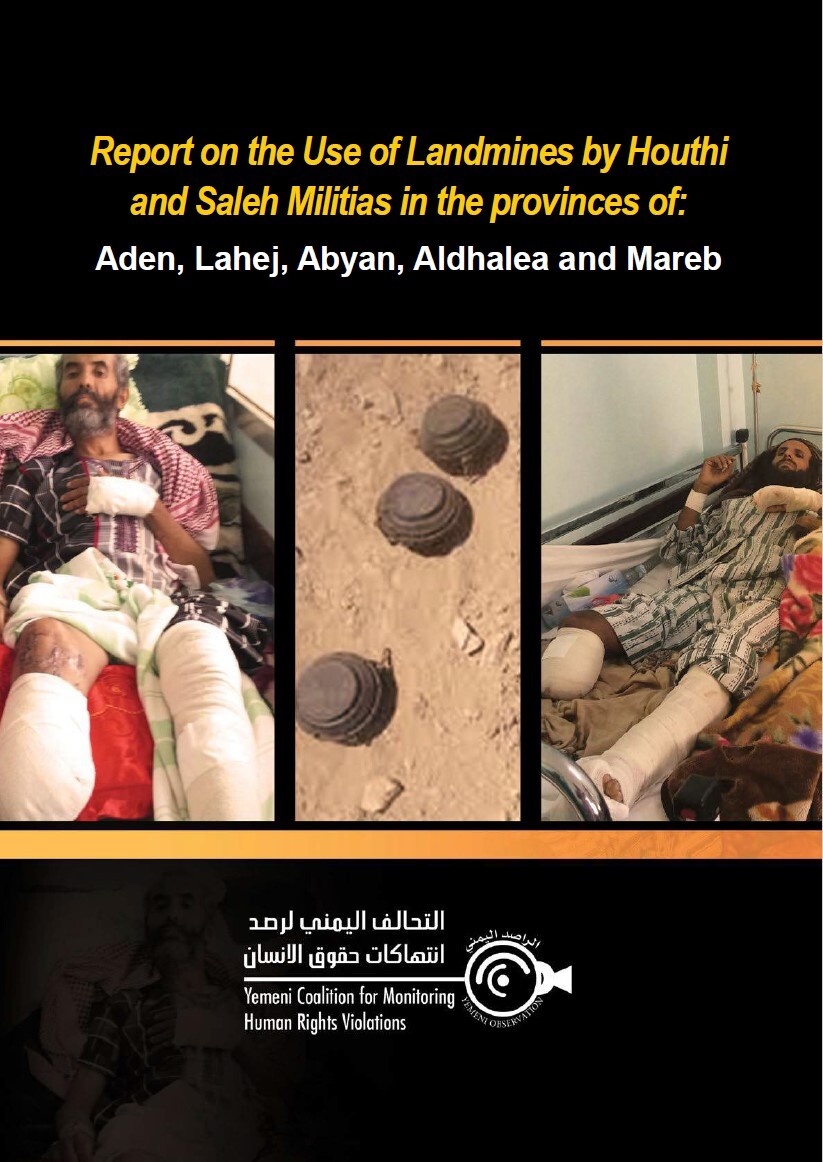
Report on the Use of Landmines by Houthi Militias in the provinces of:
This report sheds light on one manifestation of war crimes committed by Houthi and Saleh Militias in Yemen. It is the crime of using landmines, which is considered to be one of the most dangerous indiscriminate and banned weapons. Based on well-documented field visits, this report covers the period from July to November 2015 in five Yemeni provinces, namely; Aden, Abyan, Lahej, Aldhalea and Mareb following the liberation of these provinces from Houthi-Saleh Militias.
In the provinces of Aden, Abyan, Lahej and Aldhalea, Houthi-Saleh Militias have planted hundreds of anti-personnel and anti-tank landmines. This report demonstrates that these militias did not comply with even the minimum legal and ethical obligations during their military operations under war laws and norms and under the provisions of international humanitarian law banning the use of anti-personnel land mines. Moreover, it has been proven that Houthi-Saleh militias have planted land mines in densely populated areas and neighborhoods such as the case of the city of Crater in Aden or the city of Mareb. In addition, the report documents in some cases that these militias have planted land mines inside residential houses far away from any military targets or at the doorsteps of the houses of internally displaced people for the purpose of killing them as they return back.
Houthi-Saleh militias have invented new ways to using anti-tank landmines and converting them into anti-personnel land mines for the purposes of inflecting as much killing and damage as possible to people and assets. During the period from July 2015 until mid-November, land mines have killed no less than one-hundred people and injured more than 150 others including women and children in the provinces of Aden, Abyan, Mareb, Lahej and Aldhalea as confirmed by the data collected by the field monitoring team working under the Yemen Coalition to Monitor Human Rights Violations.
Houthi-Saleh militias have used anti-tank and anti-personnel land mines made in some East European countries and the Soviet Union which manufacturing dates go back to the 1980s. This is despite the fact that Yemen has ratified, in September 1998, the Landmine Ban Convention 1997 and it became effective in March 1999. The Landmine Ban Convention obligates state parties to refrain from using anti-personnel landmines under any circumstances.
Following seizing control of the Yemeni Capital Sana’a and dominating all institutions of the Yemeni state by force in late 2014 and early 2015 by Houthi-Saleh militias, incoming information indicated that armed groups affiliated to Houthis have controlled the Executive Landmine Action Center in the Capital City of Sana’a and ransacked all its contents. In addition, these militias have confiscated the depots of weapons of the Yemeni Armed Forces and used all these assets to supply and fund their attacks against people in provinces that resisted these militias.
According to initial field survey reports, Houthi-Saleh militias have left, in all areas they withdraw from, enormous quantities of anti-personnel landmines, anti-tank landmines and improvised explosive devices, which explode if any person becomes close or in contact with them. These are covered by the definition of banned anti-personnel landmines pursuant to the Landmine Ban Convention.
The number of landmines, of different kinds, removed by national army and local resistance with help from Arab Coalition Forces in the five provinces exceeded 5000 landmines.
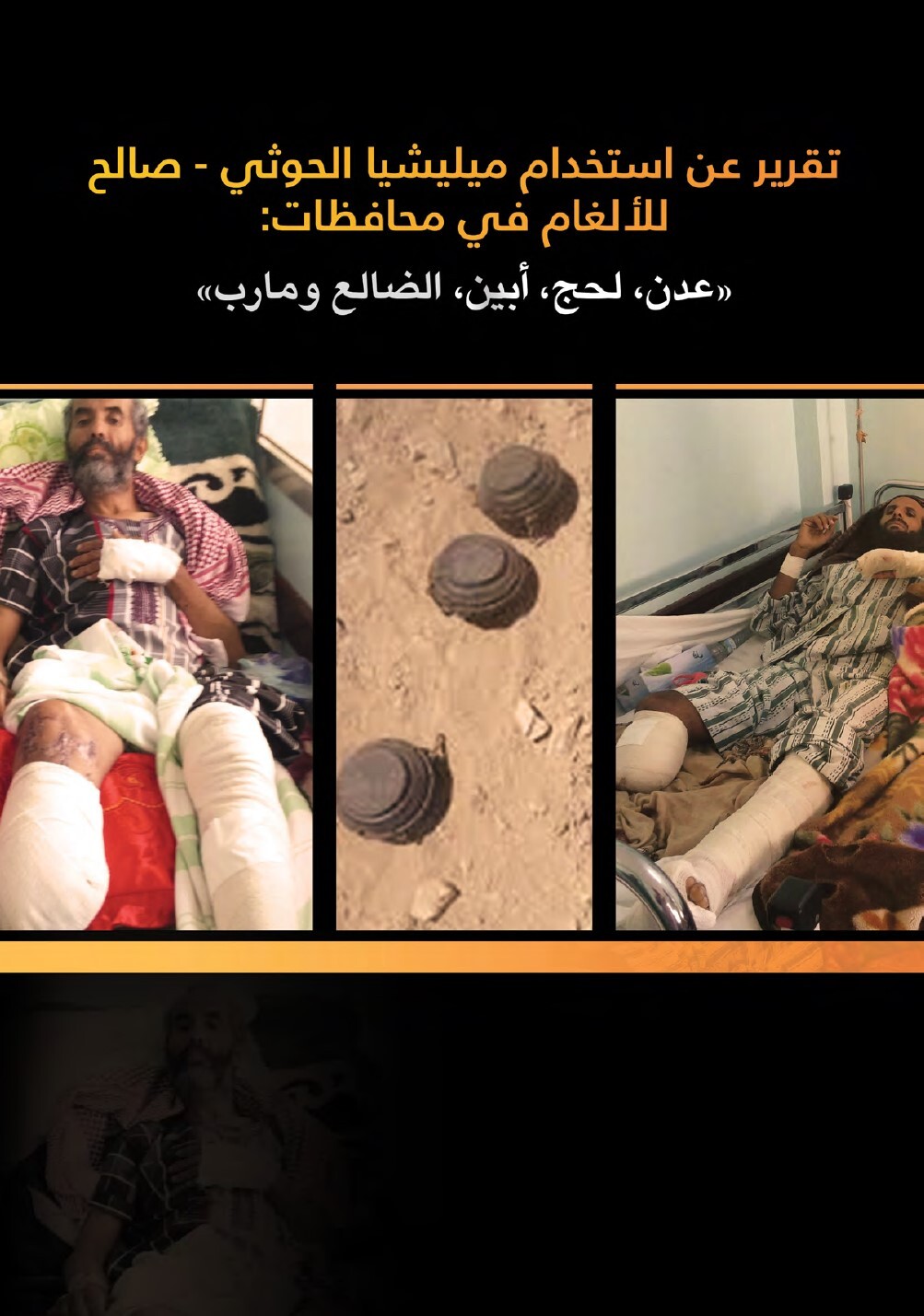
تقرير عن استخدام مليشيات الحوثي للألغام في محافظات
عدن، لحج، أبين، الضالع ومارب
هذا التقرير يسلط الضوء على واحدة من صور جرائم الحرب التي ارتكبتها ميليشيات تحالف الانقلاب في اليمن، وهي الجرائم ذات الصلة باستخدام الألغام، التي تعد واحدة من أخطر الأسلحة العشوائية المحظورة، ويغطي هذا التقرير، من واقع زيارات ميدانية موثقة، الفترة من يوليو الى نوفمبر 2015م في خمس محافظات يمنية؛ (عدن، أبين، لحج، الضالع، ومأرب) ،وذلك بعد تحريرها من قبضة ميليشيات (الحوثي – صالح).
ففي محافظات عدن وأبين ولحج والضالع زرعت ميليشيات (الحوثي – صالح) المئات من الألغام المضادة للأفراد أو تلك المخصصة للآليات، ويتبين في هذا التقرير أن الميليشيات لم تلتزم ولو بالحد الأدنى من الالتزامات القانونية والأخلاقية خلال عملياتها العسكرية، وفقا لقوانين وأعراف الحروب، ووفقا لما ينص عليه القانون الدولي الإنساني بخصوص حظر استخدام الألغام المضادة للأفراد، بل عوضا عن ذلك، ثبت أن ميليشيات (الحوثي – صالح) زرعت ألغاماً في مناطق وأحياء مدنية مأهولة بالسكان، كما هو الحال في كريتر بمدينة عدن أو بمدينة مأرب، بل وفي بعض الحالات يوثق التقرير إقدام هذه الميليشيات على زراعة الألغام في المنازل بعيداً عن أي هدف عسكري، أو على أبواب منازل النازحين، بقصد قتلهم أثناء عودتهم.
وابتكرت ميليشيات (الحوثي- صالح) طرقاً جديدة في استخدام الألغام المضادة للمركبات وتحويل استخدامها الى مضادة للأفراد وذلك بقصد إحداث أكبر قدر من القتل والضرر تجاه الناس أو الممتلكات. خلال الفترة من يوليو2015م وحتى منتصف نوفمبر، قتلت الألغام (100) شخص على الأقل وجرحت أكثر من (150) آخرين، بينهم نساء وأطفال في محافظات عدن وأبين ومأرب ولحج والضالع بحسب البيانات التي توصلت إليها فرق الرصد الميداني التابعة للتحالف اليمني لرصد انتهاكات حقوق الانسان.
استخدمت ميليشيات (الحوثي – صالح) ألغاما مضادة للمركبات وأخرى مضادة للأفراد مصنعة في بعض دول أوروبا الشرقية والاتحاد السوفيتي سابقاً تعود صناعة بعضها لحقبة الثمانينيات، رغم أن اليمن صادقت في سبتمبر 1998م على معاهدة حظر الألغام للعام 1997م ودخلت حيز النفاذ في مارس 1999م، وهي تلزم الدول الأطراف بعدم استخدام الألغام المضادة للأفراد تحت أي ظرف.
في أعقاب سيطرة ميليشيات (الحوثي – صالح) على العاصمة اليمنية صنعاء واستيلائها بالقوة على مؤسسات الدولة اليمنية أواخر العام 2014م وبداية العام 2015م، تواردت معلومات عن سيطرة مجاميع تابعة للحوثيين على المركز التنفيذي للتعامل مع الألغام في العاصمة صنعاء، وقيامها بنهب كافة محتوياته، بالإضافة الى السطو المسلح على مخازن القوات المسلحة اليمنية واستخدامها للإمداد وتمويل اعتداءاتها على السكان في معظم المحافظات التي انتفضت للدفاع عن نفسها في مقاومة هذه الميليشيات.
ووفقا لتقارير مسح أولية فإن ميليشيات (الحوثي – صالح) تركت وراءها في معظم المناطق التي انسحبت منها مخزوناً هائلاً من آلاف الألغام المضادة للأفراد، والمضادة للمركبات وعبوات ناسفة مرتجلة، والتي تنفجر بمجرد اقتراب أو ملامسة شخص لها، وتندرج تحت الألغام المضادة للأفراد المحظورة بموجب معاهدة حظر الألغام.
ويقدر عدد الألغام بمختلف أنواعها التي انتزعتها قوات الجيش الوطني والمقاومة الشعبية بمساندة قوات التحالف العربي في المحافظات الخمس بأكثر من 5000 لغم.